

OpenClaw
Personal agent runtime
AgentsAgents. Models. Your business.
Bring OpenClaw, Claude, Codex and your agent frameworks into one control plane. Choose the models behind them. Connect the business systems they work with, through scoped operations and explicit authority.
Explore the ecosystemLaunch specification · Versioned support matrices accompany releases
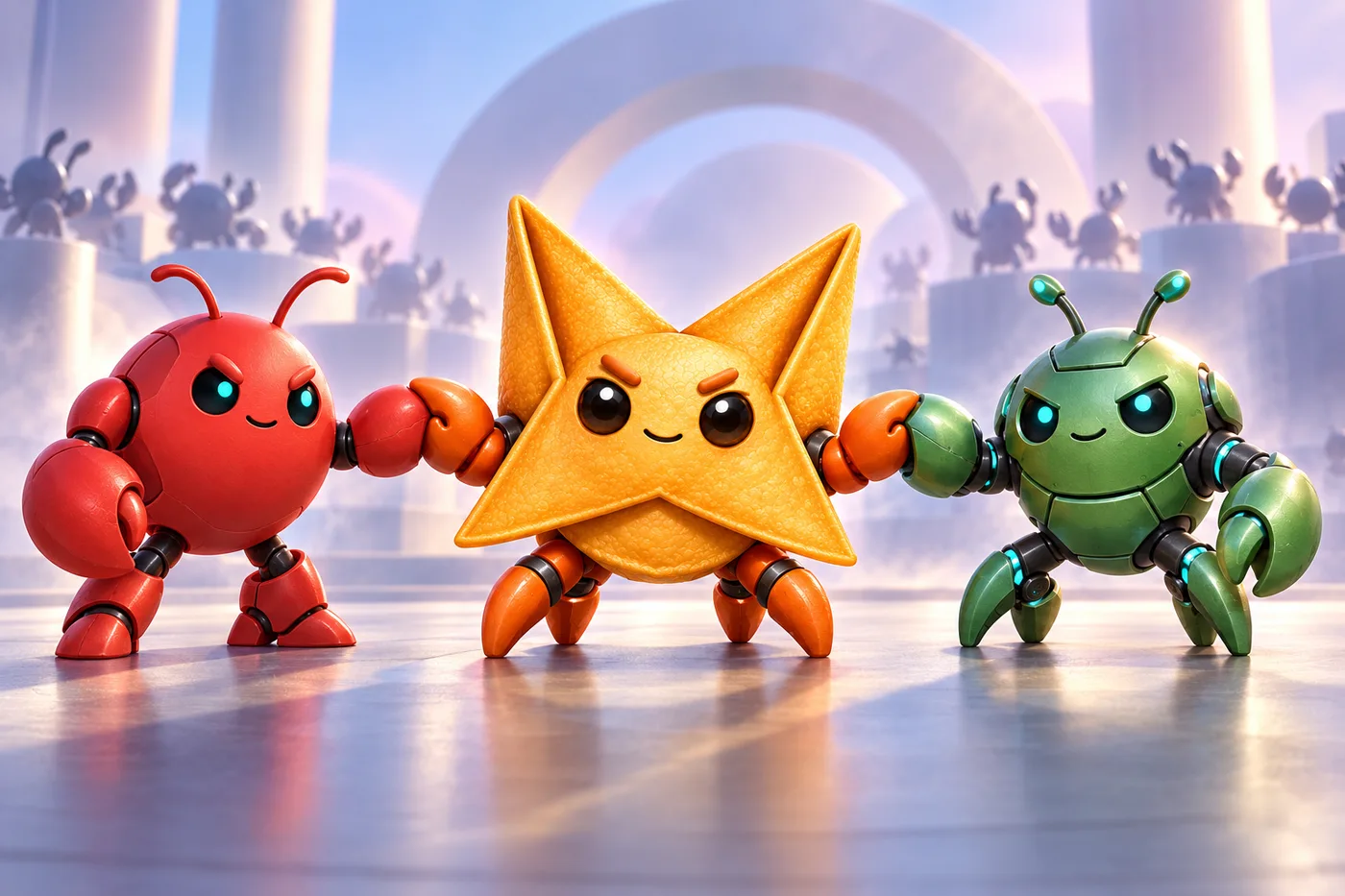
Built around your environment
Explore agents, frameworks and model providers first, then corporate software, data and infrastructure. Each integration has a distinct role. Logos identify launch targets; release manifests publish exact versions, operations and conformance evidence.
63 ecosystem targets
Personal agent runtime
Agents
OpenShell sandbox and agent lifecycle
Agents
Anthropic coding agent
Agents
OpenAI coding agent
Agents
Google terminal agent
Agents
Stateful agent orchestration
Frameworks
Multi-agent crews and workflows
Frameworks
Enterprise agent orchestration
FrameworksCustom agent applications
FrameworksGPT and reasoning model families
ModelsClaude model family
ModelsGemini model family
Models
GLM model family
Models
DeepSeek model family
Models
Qwen and Qwen Coder families
Models
Kimi model family
Models
Mistral and Codestral families
Models
Grok model family
Models
Llama model family
Models
MiniMax language models
Models
Command model family
ModelsNemotron model family
Models
Nova model family
Models
Granite model family
Models
Jamba model family
Models
Owner-managed model serving
Model serving
Self-hosted inference engine
Model serving
Local models and inference server
Model serving
Managed Inference Endpoints
Model servingMail, calendars and organization content
Business software
Team messages and review notifications
Business software
Sites, documents and knowledge sources
Business software
Mail, calendars and workspace content
Business software
Files, documents and knowledge sources
Business software
CRM records and customer workflows
Business software
Service requests and incident workflows
Business software
Issues, projects and workflow updates
Business software
Team documentation and knowledge
Business software
Messaging and scoped approval notifications
Business software
Workspace pages and knowledge
Business software
Issues, projects and release coordination
Business software
Repositories, pull requests and workflow events
Developer tools
Source control, merge requests and CI
Developer tools
Operational signals and observability
Developer tools
Scoped database operations
Data platforms
Governed warehouse queries and results
Data platforms
Data workflows and bounded job operations
Data platforms
Cloud resources and service operations
Infrastructure
Cloud resources and service operations
Infrastructure
Cloud resources and service operations
Infrastructure
Container packaging and service lifecycle
Infrastructure
Cluster resources and workload operations
InfrastructureTenant identity and access signals
Identity
Organization identity and access signals
Identity
Application identity and access signals
Identity
Self-hosted identity federation
Identity
Desktop workspace
Systems
Desktop workspace
Systems
Desktop and server
SystemsMobile SDK and companion
Systems
Mobile SDK and edge
Systems
Linux distribution
Systems
Linux distribution
SystemsEnterprise connections
Read a document in SharePoint. Prepare a Salesforce update. Propose a Jira change. Every operation declares its tenant, resource, credential scope, side effects and expected evidence before execution.
Explore connections · Coming soonOAuth and identity establish access. LNSAT or a selected authority adapter binds permission to the exact operation.
What compatibility means
An adapter declares which instructions, tools, context and lifecycle hooks a target understands, and which require adaptation.
Identity and policy systems contribute evidence. A matching authority path must still bind the exact action, scope and execution.
Conformance fixtures, version ranges, limitations and result evidence travel with the adapter. Unsupported capabilities remain visible.
The future is open
Let’s build an AI ecosystem worth trusting.