

Docker Model Runner and the local inference boundary
A practical guide to local model serving with Docker Model Runner, resource checks, API exposure, isolation, and evaluation discipline in practice.
Technical guide · Documentation checked October 3, 2026.
Key takeaways
- Model serving is an inference concern; it does not authorize an agent tool call.
- Docker Model Runner exposes OpenAI-compatible and Ollama-compatible interfaces, but reachable inference APIs still need network controls.
- Record model, engine, hardware, context, and isolation evidence before comparing local runs.
What Docker Model Runner changes[source 1]
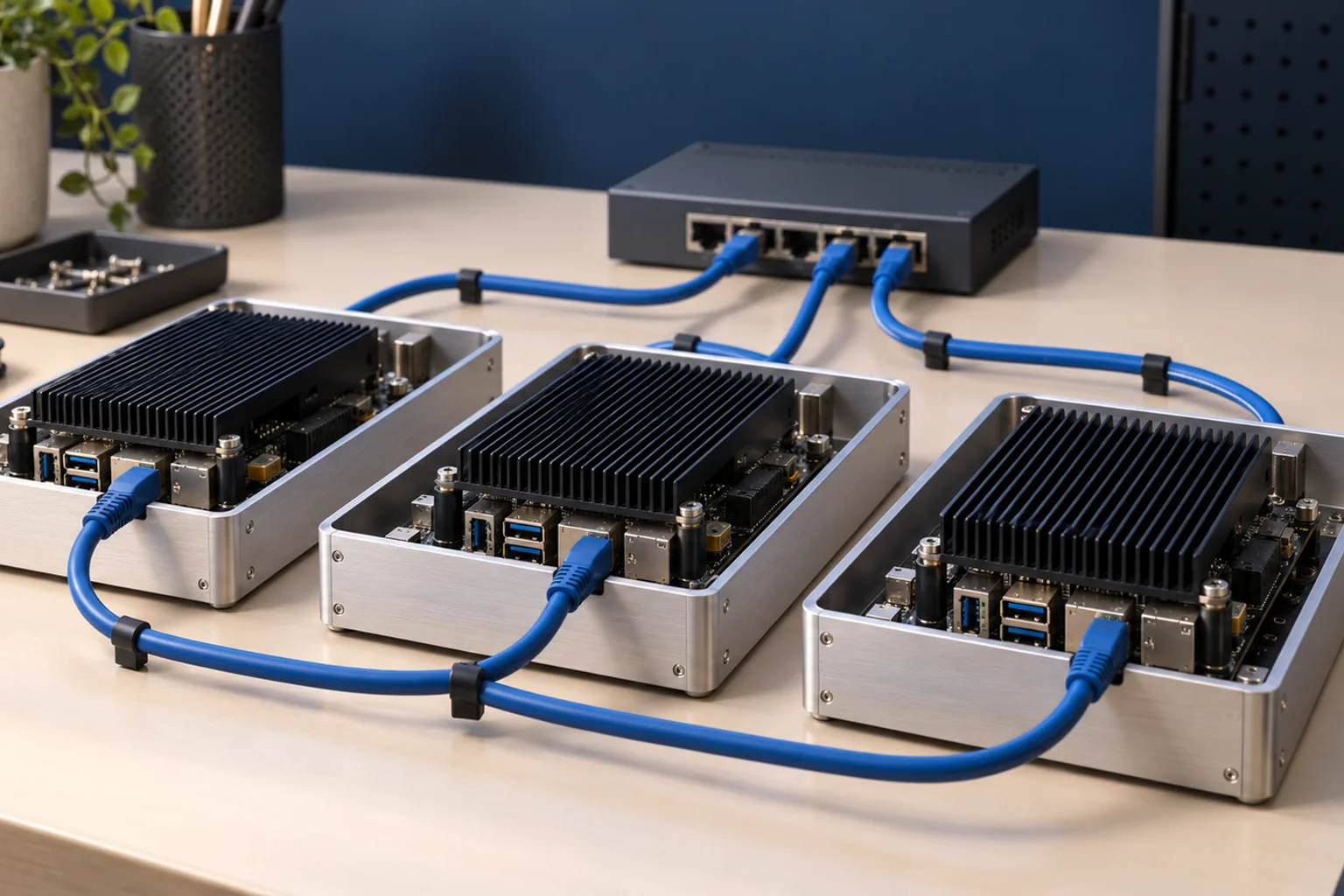
Docker Model Runner gives a Docker-managed place to pull, cache, and serve models from OCI registries or Hugging Face. Its useful abstraction is model distribution plus an inference engine: a team can move a model artifact through familiar registry controls, then expose a local serving interface to an application.
The important boundary is inference. A model endpoint produces tokens or other model results; it does not decide whether a user or agent may read a repository, send a message, or mutate a business system. Keep inference selection separate from runtime tool policy and business-operation approval.
Choose engine and hardware together[source 1]
Docker documents llama.cpp, vLLM, and Diffusers as distinct engine choices. llama.cpp is oriented toward efficient local development and GGUF models; vLLM targets throughput-oriented serving with Safetensors; Diffusers covers image generation. Hardware and operating system determine which combination is credible, so a compatibility record should name the engine, model format, accelerator, driver, architecture, context limit, and quantization.
Do not compare a laptop CPU run with a GPU server run as if they were one deployment class. Capture time to first token, generation throughput, memory pressure, context length, concurrency, cold-start behavior, and output/tool-call conformance. A benchmark is evidence for a specific workload and environment, not a general release guarantee.
Treat reachability as a security decision[source 1]
Docker’s documentation states that the Model Runner API is unauthenticated and that any client able to reach it can send inference requests and manage models. That makes network placement a first-class control. Keep the endpoint on an owner-controlled boundary, inspect container-to-host reachability, and decide which workloads may submit prompts or load model artifacts.
A container or sandbox can reduce blast radius, but it does not establish identity, approval, or business authorization. Store credentials by reference, restrict egress, separate development and sensitive workloads, and record who can change the model catalog. Never pass secrets or customer data to a local endpoint merely because it is on a private network.
Turn observations into a deployment decision
A useful evaluation asks four questions: can the model produce the required structured output, can the runtime preserve the declared tool boundary, can the serving environment meet data and latency requirements, and can the team reproduce the chosen configuration? Record model identity, engine, endpoint exposure, hardware, limits, data route, and rollback path as one decision packet.
In a governed agent stack, these observations can populate a versioned model profile. The profile informs runtime selection and compatibility review; it does not authorize a business side effect. Exact tool authority still belongs to the application’s policy and approval path.