ChatGPT agent joined research, browsing and terminal work in one task surface
OpenAI introduced ChatGPT agent on July 17, 2025, combining browser tools, terminal access, connectors and task interruption controls.
Historical reporting: OpenAI’s July 17, 2025 launch and system card document the event. The launch post itself is marked outdated; no current availability is asserted.
Key takeaways
- A unified agent still needs distinct permissions for each tool.
- Browser takeover and connector access create separate data boundaries.
- Interruptibility should be tested as a state transition.
OpenAI presented a unified agentic task environment[source 1][source 2]
On July 17, 2025 OpenAI introduced ChatGPT agent as a system combining visual and text browsers, a terminal and direct API access. Its system card, published the same day, describes the agent as combining deep research and Operator capabilities. The launch page is explicitly marked outdated, which is useful historical context: the records support a dated release analysis, not a statement about the current product surface or plan eligibility.
Tool selection can cross data and action boundaries in one run[source 1][source 2]
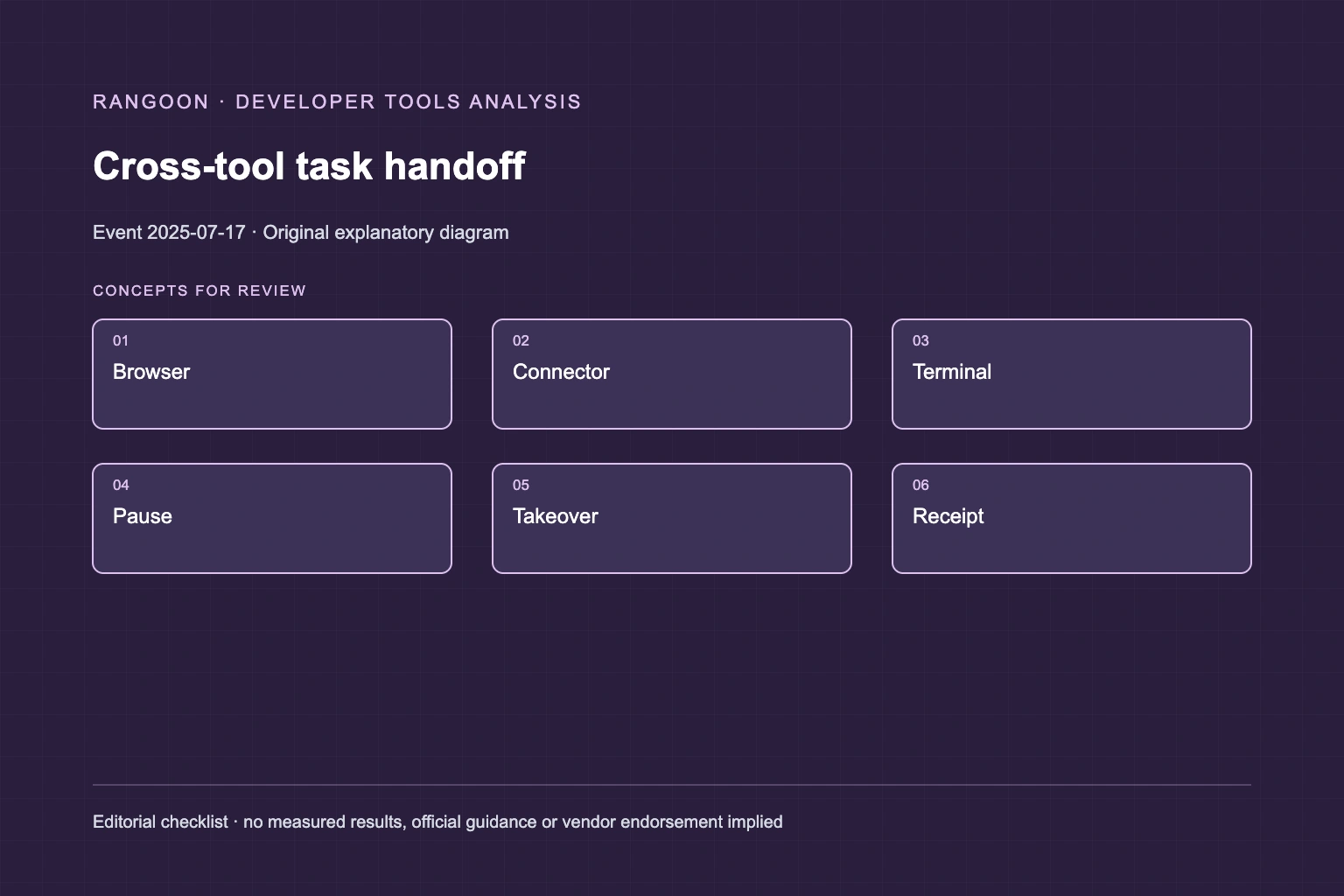
A task may move from reading public pages to operating a browser, using connected data or running code. Each transition should be logged with the chosen tool, target system, credential state and requested side effect. A graphical browser is not inherently safer than an API, and a terminal is not merely a text box; both can reach information or actions outside the initial prompt. The control model must therefore validate each action at the host boundary.
Test stopping, takeover and partial completion deliberately[source 1][source 2]
Create a fixture that pauses before a consequential form submission, requires a browser takeover for login, loses one tool mid-run and produces a partial report. Verify that the user can see what happened, cancel future actions and receive a result marked incomplete rather than silently successful. Save retrieval identifiers and timestamps for research output, then separately record any edit or submission receipt. This makes a later correction traceable across the agent’s heterogeneous tools.
Analysis: a single interface can hide many trust decisions[source 1][source 2]
Editorial analysis: combining research and action reduces handoffs for a user, but it also makes it easier to overlook where authority changes. Product teams should model these transitions explicitly and present confirmation where a person can understand the exact destination and consequence. The operational goal is not to make every task frictionless; it is to keep research evidence, proposed edits and authorised side effects distinguishable.
OpenAI described the July product as a combination of Operator-style website interaction and deep-research-style synthesis, with its own computer, code execution, editable slides and spreadsheets. The launch examples included navigating sites, asking the user to log in securely, filtering results and producing a deck from analysis. This creates a real technical handoff between browser state, connected data, code and output files.
A useful record should preserve the source URLs and files that informed the result, plus the exact point where the agent paused for login or user confirmation. Editable output is not a final action: a spreadsheet formula or slide citation must remain inspectable after the run. The launch page itself now labels the announcement outdated, which reinforces the article’s historical framing and rules out treating its availability details as current product terms.
The release described tool choice as proactive, so a final receipt should name whether browser navigation, terminal code or a connector supplied each consequential result.
Sources
- OpenAI: Introducing ChatGPT agent (July 17, 2025)
- OpenAI: ChatGPT agent System Card (July 17, 2025)
Continue reading