Microsoft Agent Framework joined AutoGen and Semantic Kernel into one runtime story
Microsoft announced Microsoft Agent Framework on October 1, 2025 as an open-source SDK and runtime combining Semantic Kernel foundations with AutoGen orchestration patterns.
Historical reporting: Microsoft announced its Agent Framework preview on October 1, 2025. The event describes an SDK and runtime direction, not proof of enterprise deployment outcomes.
Key takeaways
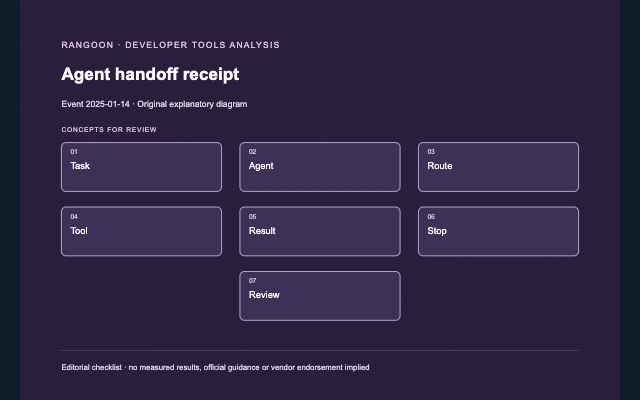
- The announcement combined two prior framework lineages under a new runtime.
- Agent and workflow abstractions need different acceptance cases.
- A unified framework does not remove model, identity or tool-boundary work.
Microsoft framed the October event as a unified foundation[source 1][source 2]
Microsoft’s Foundry and .NET posts, both dated October 1, 2025, introduced Microsoft Agent Framework as an open-source SDK and runtime. The Foundry post said it unified Semantic Kernel’s enterprise-oriented foundations with AutoGen orchestration patterns; the .NET post introduced agents and workflows as core building blocks. The sources establish an announcement and preview framing. They do not prove a team can transfer a prototype unchanged into a managed service, nor do they establish the behaviour of a model or connector selected later.
The two posts serve different audiences: Foundry describes an open-source engine and product-stack integration, while the .NET article explains agents and workflows to application developers. Reading both prevents a false equivalence between framework code and a hosted control plane. A team must decide independently which portions it will operate.
Agents and workflows carry different control surfaces[source 1][source 2]
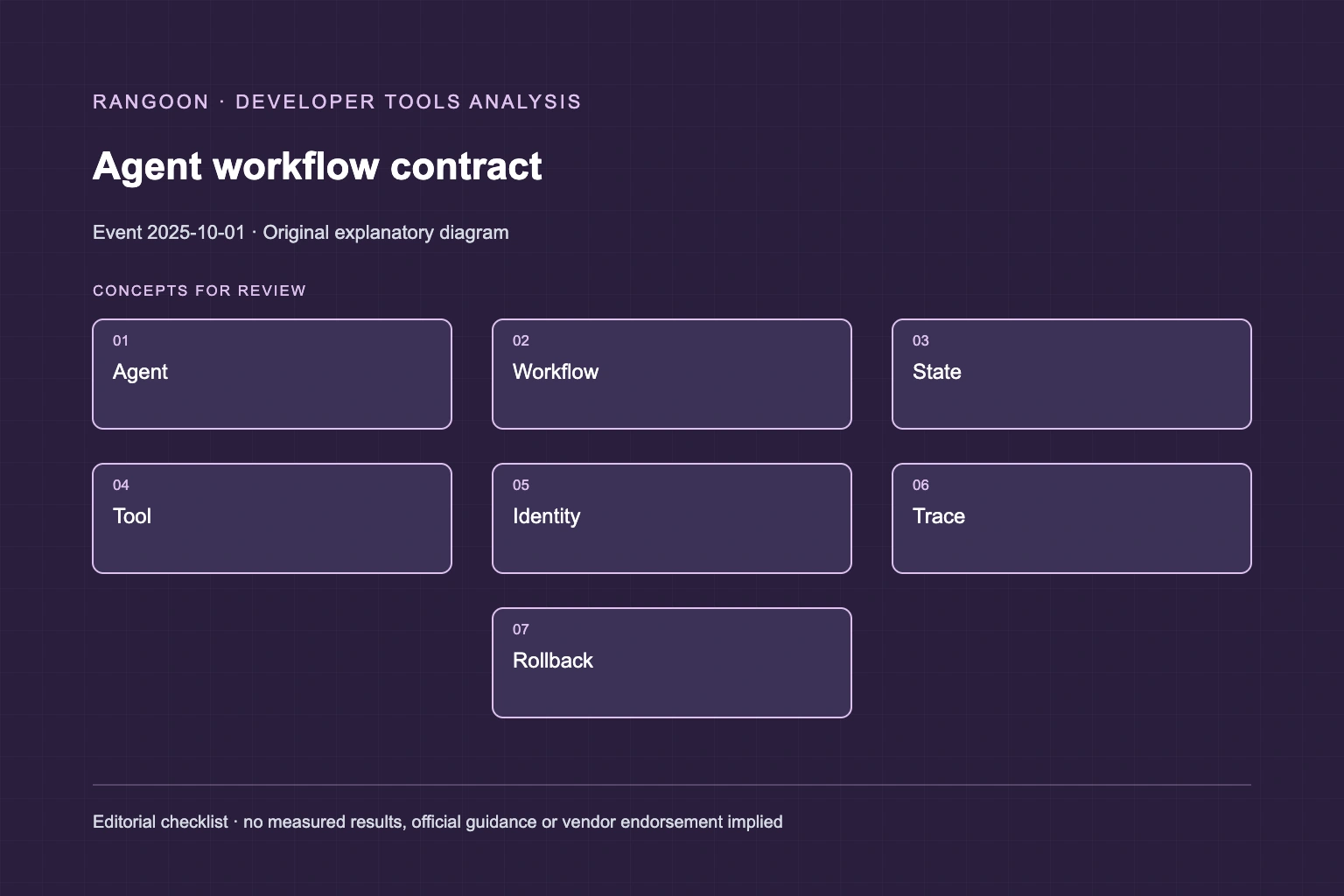
An agent combines reasoning, context and tools toward an objective, while a workflow makes execution structure more explicit. That distinction supports a useful review boundary: agent instructions and tool policy need tests for selection and delegation; workflow nodes and edges need tests for order, retries, persistence and compensation. The announced unification addressed framework fragmentation, but it did not make every external API safe to expose or every multi-agent decision observable by default.
The framework’s lineage also suggests a migration hazard: an AutoGen-style collaboration may depend on conversation semantics, while a Semantic Kernel integration may depend on plugin or connector behavior. Inventory those assumptions before rewriting orchestration. A shared brand does not make retry semantics, memory ownership, or service credentials identical.
A shared runtime still requires a deployment contract[source 1][source 2]
Write a deployment contract that names the model provider, identities, data store, network path, tool permissions, persistence policy, telemetry destination and rollback owner. Then test a lost worker, invalid tool result, denied identity and resumed workflow. These cases reveal whether an apparent local orchestration success survives service boundaries. A framework can provide abstractions for the system; it cannot silently settle an organisation’s retention, access or escalation choices.
Deployment tests should place a human approval between a proposed action and a real side effect, then verify restart behavior while approval is pending. This validates durable state without granting a task permission to complete by itself. Record the approver identity separately from the agent that prepared the proposal.
Analysis: unify APIs only after preserving behavioral fixtures[source 1][source 2]
When consolidating framework code, retain one fixture for each meaningful behavior: a single tool call, a handoff, an interrupted workflow, a long-running task and a human approval. Compare outputs and side effects across old and new implementations. The strongest migration evidence is a narrow, versioned test set with explicit stop states, rather than a claim that two libraries share a parent product story.
A consolidation review should identify which abstraction owns compensation after a partially completed workflow. If no component owns it, the design is incomplete regardless of the SDK used. Document the compensating action, its idempotency, and the human decision required when the original effect cannot be reversed automatically.
Sources
- Microsoft Foundry Blog: Introducing Microsoft Agent Framework (October 1, 2025)
- .NET Blog: Introducing Microsoft Agent Framework Preview (October 1, 2025)
Continue reading