

Qwen3-Next turned sparse architecture into a long-context test plan
Qwen announced Qwen3-Next on September 10, 2025 with hybrid attention, sparse MoE, and multi-token prediction. Architecture claims need sequence-position and throughput evidence.
Historical reporting: Qwen’s September 10, 2025 Qwen3-Next post introduced the architecture and 80B-A3B base model; the model card provides a separate artifact record. The analysis below is original editorial analysis; it does not claim present availability, performance, or support.
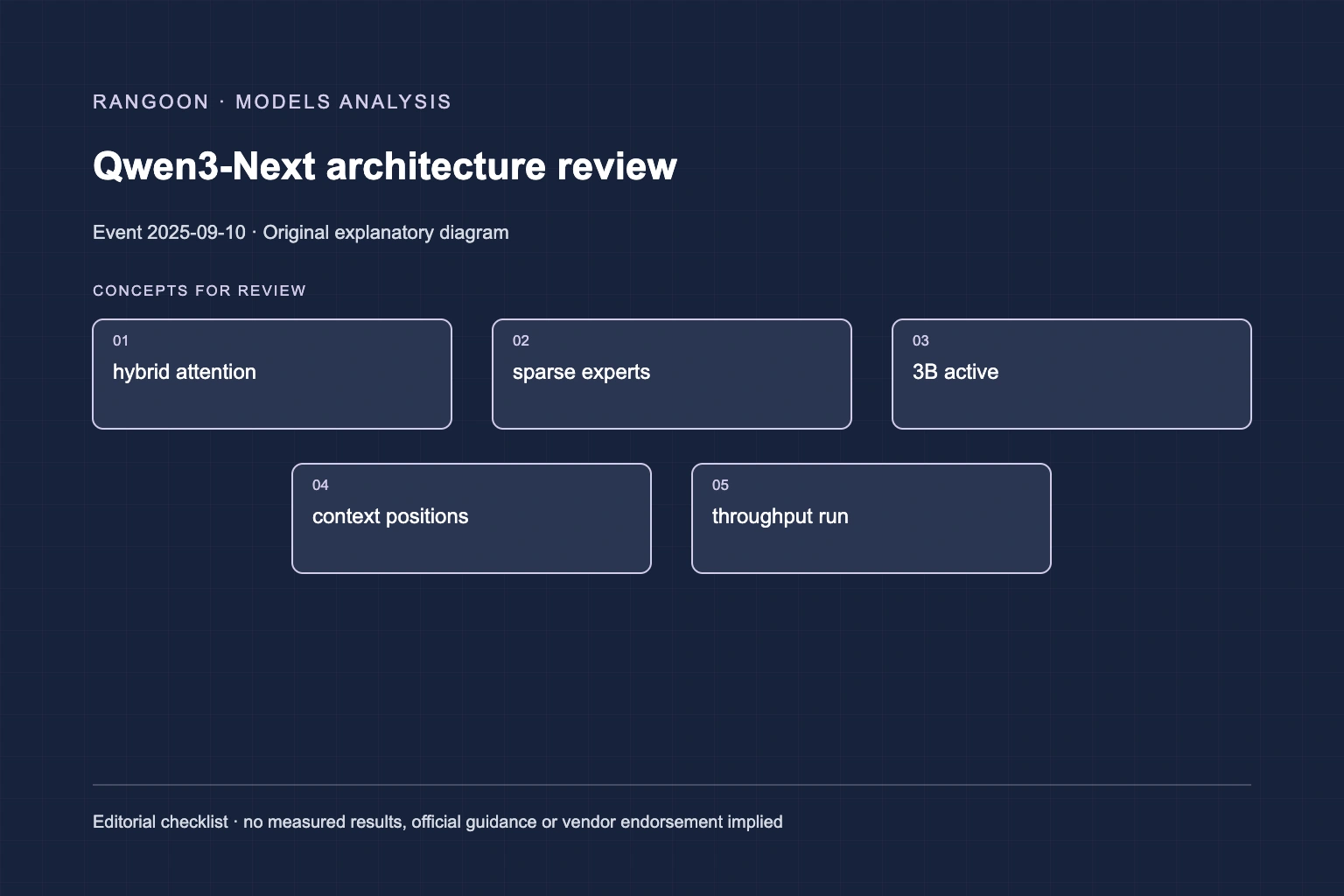
Key takeaways
- On September 10, 2025, Qwen introduced Qwen3-Next and described hybrid attention, a highly sparse mixture-of-experts structure, training-stability changes, and multi-token prediction.
- Long-context evaluation should identify the input distribution: document length, source order, query location, required quotations, and output budget.
- The September 2025 post supports Qwen’s own architecture and efficiency descriptions. It does not independently verify benchmark comparisons or current model access.
What Qwen introduced[source 1][source 2]
On September 10, 2025, Qwen introduced Qwen3-Next and described hybrid attention, a highly sparse mixture-of-experts structure, training-stability changes, and multi-token prediction. It said the Qwen3-Next-80B-A3B base model had 80 billion total parameters and three billion active parameters during inference. Those are architectural and supplier-reported efficiency claims.
The Qwen3-Next model card is a separate document for a specific released artifact. It can describe usage and declared context material, while the launch post supplies the architecture narrative. Neither document proves another host’s throughput, cost, or effective retrieval accuracy at a long prompt position.
Editorial analysis: map the context workload
Long-context evaluation should identify the input distribution: document length, source order, query location, required quotations, and output budget. Test early, middle, and late evidence. A model can accept a long sequence while still missing the information a workflow needs to recover.
Sparse routing and hybrid attention can change throughput characteristics across batch sizes and sequence lengths. Record prompt length, generated length, batch policy, hardware, precision, cache behavior, and concurrency before making an efficiency comparison.
Editorial analysis: avoid parameter-count shorthand
Total parameters, active parameters, and deployed memory are different measurements. A practical feasibility sheet should state weights format, host memory, accelerator memory, context cache, maximum concurrency, and target latency. This makes the deployment question inspectable without turning an architecture label into a hardware guarantee.
For multi-token prediction, test acceptance with the same decoding policy and verify output quality after speculative paths. Faster token generation is useful only when final text, tool syntax, and stop behavior remain inside requirements.
Editorial analysis: record architecture-dependent tests
Keep a test matrix that includes short tasks, long retrieval, structured output, tool calls, and high-concurrency service. Note which settings are architectural experiments and which are accepted operational settings. That prevents a lab throughput result from silently becoming a capacity commitment.
Qwen3-Next’s event date marks an architectural proposal and released model artifacts. The historical record should preserve the stated configuration and not make claims about later serving implementations.
Editorial analysis: retain the release boundary
The September 2025 post supports Qwen’s own architecture and efficiency descriptions. It does not independently verify benchmark comparisons or current model access.
A hybrid-attention and sparse-expert design suggests a specific hypothetical load test: mix short classification requests with long evidence retrieval and tool-call completion under one queue. Report short-request latency separately from long-request latency, because batching can make an aggregate throughput figure hide a poor interactive experience. Also test the same long document with the needed passage at several locations. If the system improves token throughput but loses a required citation in the middle, the deployment decision remains unresolved. The test is architecture-aware without assuming that the launch description predicts a given implementation. It turns Qwen’s efficiency claims into a list of falsifiable operating questions.
A release decision can then distinguish a gain in one workload class from a loss in another. That is more informative than a blended performance summary across incompatible request shapes.
Sources
- Qwen: Qwen3-Next (September 10, 2025)
- Qwen3-Next-80B-A3B model card
Continue reading
Related reading
 News analysisQwen3-235B-A22B-Instruct-2507 made mode selection an artifact choice3 min read
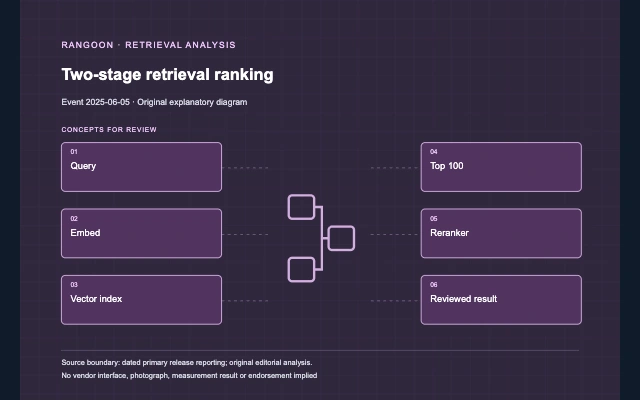 News analysisQwen released Qwen3 Embedding and Reranking models with dual-encoder and cross-encoder retrieval paths3 min read
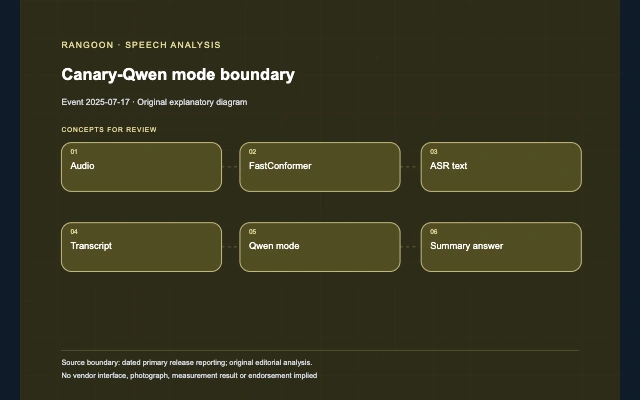 News analysisNVIDIA announced Canary-Qwen-2.5B as an open ASR and language-model combination3 min read