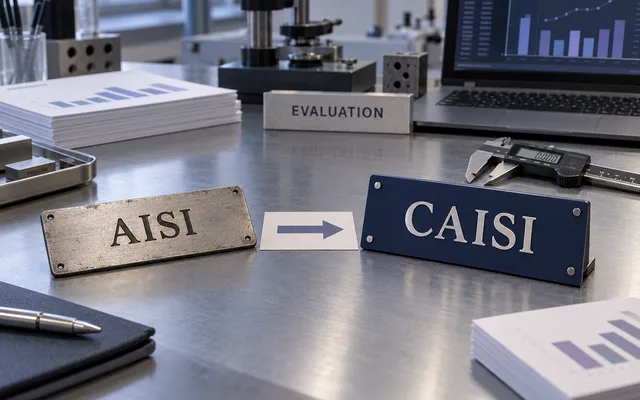

Trump's Super Intelligence meeting: the accord and its implications for AI governance
What happened at the September 29 White House meeting, what the voluntary frontier-AI accord covers, and where Rangoon and LNSAT fit in deployment governance.
Meeting and accord: September 29, 2026. Published October 4, 2026. Reporting draws on official remarks, the published accord and Executive Order 14434; deployment analysis is Rangoon Editorial's interpretation.
Key takeaways
- The White House meeting produced a voluntary commitment to internal controls, independent evaluation and board oversight of frontier AI.
- The separate Super Intelligence naming order changes executive-branch terminology; it does not establish that a model has achieved a new technical capability.
- For teams deploying agents, model assurance and authority over real-world actions remain separate engineering responsibilities.
What happened at the White House[source 1][source 2][source 3][source 6]
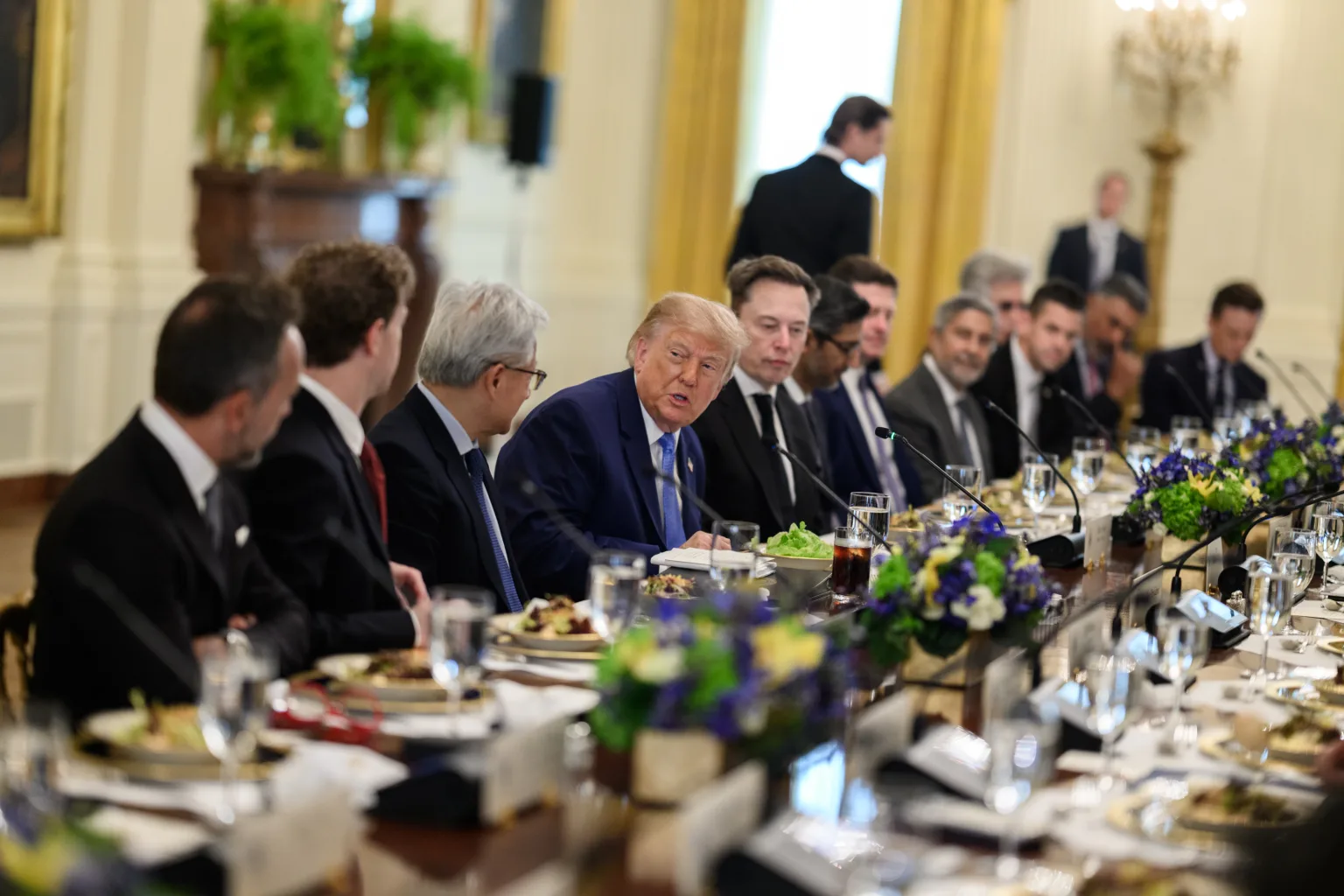
President Donald Trump hosted a Super Intelligence luncheon in the White House East Room on September 29, 2026. House Speaker Mike Johnson and technology industry leaders took part in the discussion. In his remarks afterward, Johnson said he had urged the meeting for weeks and described its purpose as balancing American technological leadership with product safety and public trust.
The resulting White House Accord on Super Intelligence names Trump and leaders from Google, Anthropic, Meta, OpenAI, xAI and NVIDIA. The published signatories include Sundar Pichai, Dario Amodei, Mark Zuckerberg, Greg Brockman, Elon Musk and Jensen Huang. Johnson described the industry's commitments as voluntary. The accord and the executive order signed that day should be read separately: one addresses company oversight, while the other addresses federal terminology.
The accord sets out four layers of oversight[source 2]
The accord focuses on companies training and deploying frontier models. It calls for controls covering areas such as cyber, biological and chemical risks, including unintended access to technical systems. Its four layers are:
- Operational controls: monitor model capabilities and behavior during training and deployment.
- Internal assurance: assign a team to check that controls and detection work and that issues are addressed.
- External evaluation: engage an independent auditor or evaluator to assess those controls.
- Board accountability: establish an independent board committee to receive findings and oversee remediation.
What the Super Intelligence order changes[source 3]
Executive Order 14434 directs executive departments and agencies, to the extent permitted by law, to use Super Intelligence and SI instead of Artificial Intelligence and AI in communications and other non-statutory documents. It does not require changes to previously issued regulations, contracts, grants or historical documents.
For implementation, the order initially points to the existing statutory definition of artificial intelligence. It asks the Assistant to the President for Science and Technology to propose legislative language for a federal SI definition within 60 days. Our reading is that the naming change is an administrative policy, not a benchmark result demonstrating generally superhuman intelligence. Technical evaluations still need to identify the model, version, task and measured performance.
Where Rangoon and LNSAT fit[source 4][source 5]
Rangoon's launch architecture organizes agent profiles, reusable skills, workflows, model choices, connectors and deployment targets into inspectable configurations. The goal is to give an operator a coherent account of what is being deployed, the capabilities it can request and the controls those requests must pass.
LNSAT is the reference execution-authority and evidence engine in that architecture. Its documented flow binds a proposed operation to an exact action packet, evaluates policy, obtains approval when required, authorizes one-time execution and records the result. A changed resource or payload requires a fresh decision. An uncertain external outcome remains unresolved until reconciliation supplies evidence, rather than being silently treated as success or retried.
Other policy engines and authority adapters can participate through explicit contracts. Identity, policy advice and transport remain distinct from permission to execute. That distinction matters when a team combines multiple model providers, an enterprise identity system and connectors with powerful credentials.
These are the project's published architecture and development direction. They are not a claim that Rangoon participated in the accord, that every integration is released, or that using LNSAT satisfies the accord or a government compliance requirement. Execution controls also do not replace frontier-model evaluations, independent auditors or accountable human oversight.
What technical teams can examine now[source 4][source 5]
An actionable review can start with one bounded workflow and follow it from configuration to consequence. This is our engineering interpretation, not a checklist prescribed by the White House accord. The objective is to make failures, denied actions and incomplete outcomes as visible as successful runs.
- Identify the deployed model and agent configuration, the permitted data classes and the environment boundary.
- Test whether changed inputs, expired approvals or a different target resource are rejected before execution.
- Verify that connector credentials cannot bypass the selected authorization path.
- Retain decisions and outcome evidence with access controls, redaction and retention rules appropriate to the workload.
- Give reviewers reproducible tests and unresolved findings, alongside a named owner for remediation.
Sources
- Speaker Johnson: remarks following the White House meeting (September 29, 2026)
- White House Accord on Super Intelligence — text archived by the American Presidency Project (September 29, 2026)
- White House: Executive Order 14434, Inaugurating the Era of Super Intelligence (September 29, 2026)
- Rangoon architecture
- LNSAT: execution authority for AI agents
- White House: official September 29 luncheon photo gallery (September 29, 2026)
- White House copyright policy
Continue reading