

OECD launched the Hiroshima AI reporting framework, making comparable company disclosures the event—not proof of compliance
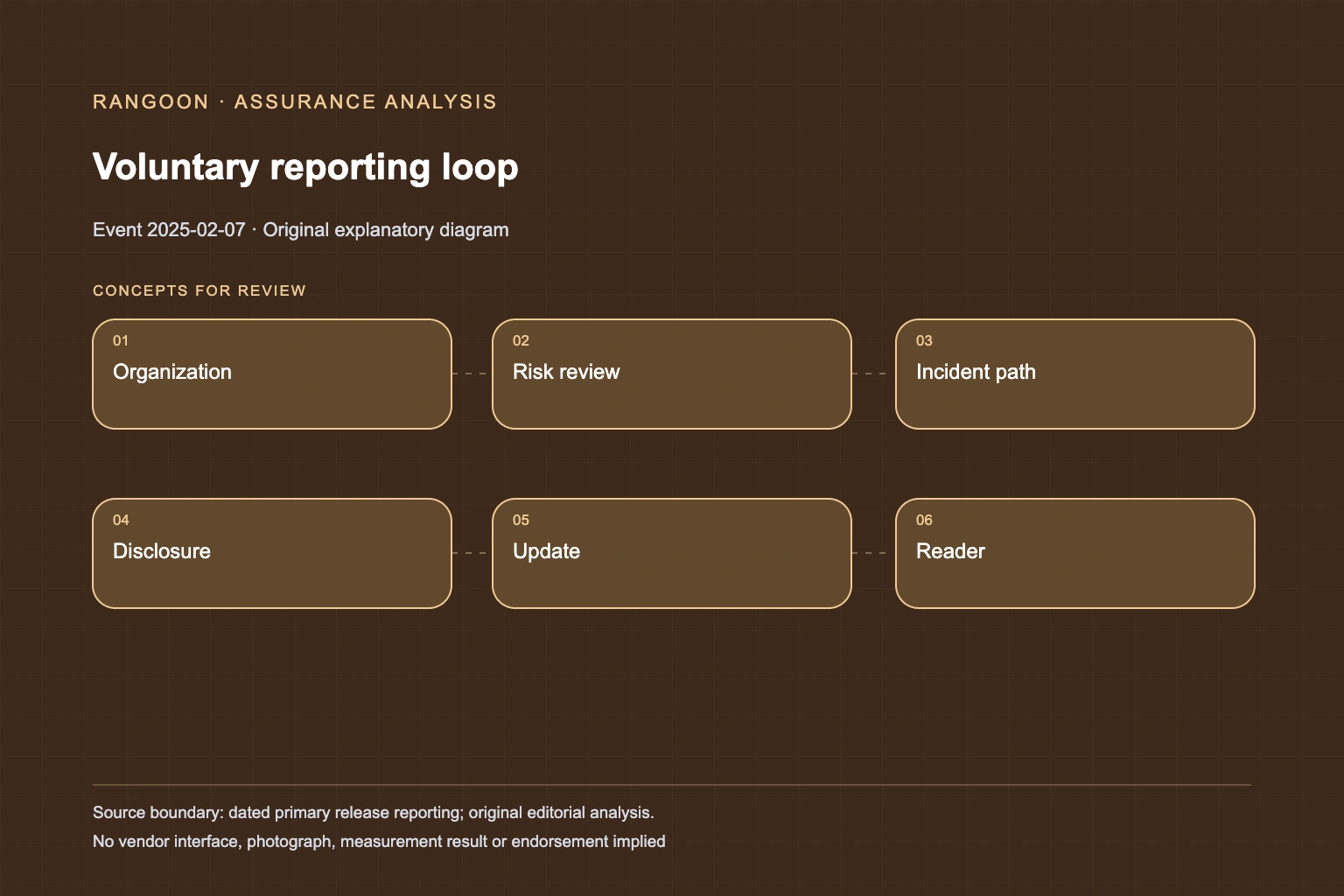
OECD launched a Hiroshima AI Process reporting framework on February 7, 2025, inviting advanced-AI organizations to disclose risk-management practices in a shared format.
Historical reporting: OECD announced the launch of a global reporting framework on February 7, 2025 to monitor application of the G7 Hiroshima Process International Code of Conduct for organizations developing advanced AI systems. OECD said the framework would collect comparable information on risk assessment, incident reporting and information-sharing practices; it invited inaugural reports by April 15, 2025 and rolling submissions afterward. The underlying Hiroshima Code is a voluntary international code. OECD’s launch record and the Code establish a reporting mechanism and its reference framework, not proof that a company complied, an audit verdict, a government approval, or a complete account of any system’s safety.
Key takeaways
- OECD launched a reporting framework and invitation process; reporting is evidence of disclosure, not an automatic compliance finding.
- The framework focused on comparable information about risk assessment, incident reporting and information sharing.
- The Code of Conduct and the framework were voluntary reference mechanisms, not system certifications or regulatory approvals.
OECD’s February event created a reporting channel around the Hiroshima Code[source 1]
On February 7, 2025, OECD announced what it described as the first global framework for companies to report on efforts to promote safe, secure and trustworthy AI. The framework was tied to the Hiroshima Process International Code of Conduct for Organizations Developing Advanced AI Systems, a G7 process component originating in Japan’s G7 presidency. OECD said leading developers had contributed to a pilot phase and listed companies that had pledged to complete inaugural reports. This was an operational governance milestone: a public framework invited structured voluntary disclosure across organizations. A pledge, pilot participation or submission invitation does not establish that a company has implemented every Code action, had its safety work independently audited, or met a government approval threshold. The event is framework launch, not compliance determination.
OECD centered comparable reporting on specific governance practices[source 1]
OECD described the framework as a way for organizations developing advanced AI to provide comparable information about risk-management actions and practices. The announcement names risk assessment, incident reporting and information-sharing mechanisms as examples. That focus gives the reporting event a concrete evidence function: it asks organizations to expose parts of their governance practices in a common form rather than merely sign a high-level statement. OECD also said the framework was aligned with multiple risk-management systems, including the Hiroshima Code, to promote interoperability and consistency. Alignment does not mean that the systems are identical, that one disclosure meets every legal obligation in every jurisdiction, or that a report proves technical performance. A comparable reporting form can reveal practices and gaps; it cannot independently validate each answer or eliminate the need for system-specific evidence.
The initial reporting deadline marked an invitation and cadence, not a delivered audit population[source 1]
The OECD release invited organizations to submit inaugural reports by April 15, 2025 and said submissions would then be accepted on a rolling basis, with annual updates welcome. Those dates establish the expected reporting cadence. They do not establish that every named organization submitted by the target date, that all reports used identical source evidence, or that reports reached comparable depth. The release itself says organizations were invited, while reporting organizations were welcome to update their material annually. A report can document what an organization says about its processes at a point in time; changes in model capability, deployment setting, incident history and internal controls need later records. Historical coverage should therefore distinguish framework launch and participation intent from actual submission, review, remediation and independent assurance outcomes.
A voluntary international Code supplied the reference point without becoming a regulatory license[source 1][source 2]
The OECD announcement identifies the Hiroshima Process International Code of Conduct as the framework’s reference point. The Code asks organizations developing advanced AI systems to take voluntary actions for safe, secure and trustworthy development, including risk management, transparency and incident-related practices. Its existence gives the reporting form a defined policy vocabulary, but a code is not a product authorization, a legal advice document or a universal test protocol. The February sources do not disclose a model’s weights, training data, evaluation design, incident log, tool permissions or downstream deployment conditions. Nor do they state that every disclosure had been independently verified. The durable historical claim is narrower and stronger: OECD opened a global voluntary reporting mechanism to make stated risk-management practices more comparable under the Hiroshima Process.
Sources
Continue reading
Related reading
 News analysisUK’s third-party AI assurance roadmap mapped professionalization, information access and a planned innovation fund3 min read
 News analysisUK published an AI cyber-security code with 13 voluntary principles and an implementation guide3 min read
 News analysisThe UK retitled its AI Safety Institute and put security risks at the centre of its remit4 min read