SK hynix’s HBM4 samples marked a qualification stage, not volume supply
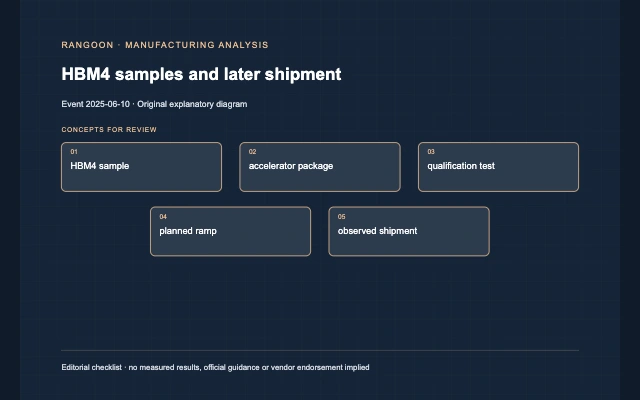
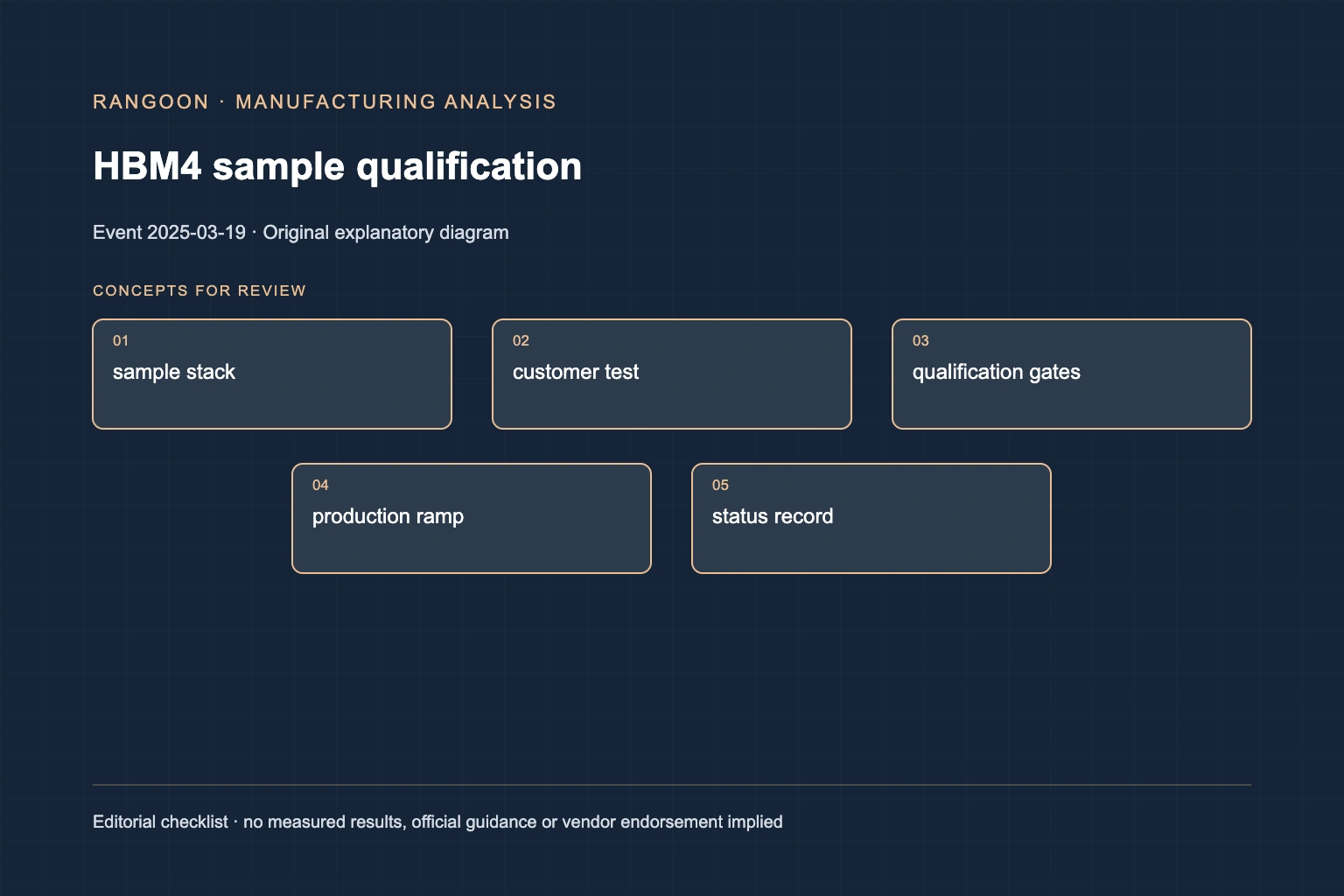
SK hynix said it shipped 12-layer HBM4 samples to customers on March 19, 2025. The event showed why sample, qualification, and mass-production records need separate meanings.
Historical reporting: SK hynix announced 12-layer HBM4 sample shipments on March 19, 2025. Later SK hynix reporting on development and mass-production preparation is distinct; analysis below is editorial.
Key takeaways
- A sample shipment gives customers material for testing; it is not evidence of qualified volume supply.
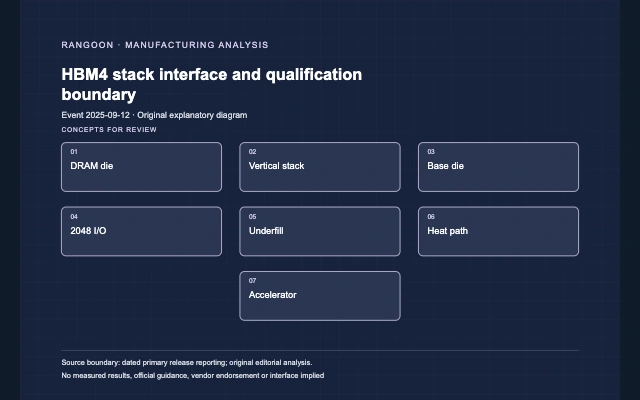
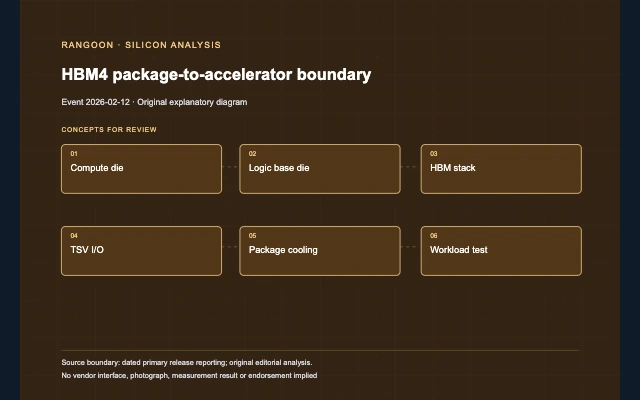
- HBM readiness depends on stack, interface, package, accelerator, and system validation.
- Milestone records should preserve what was delivered, to whom, and what validation remained.
What SK hynix reported[source 1][source 2]
On March 19, 2025, SK hynix said it had shipped 12-layer HBM4 samples to customers. Its announcement described the product as a next-generation high-performance DRAM for AI and placed the shipment after the company’s prior HBM3 and HBM3E production milestones. The news was a delivery of samples, not an announcement that a customer platform had completed qualification or entered broad commercial deployment.
In September 2025, SK hynix separately said it had completed HBM4 development and prepared for mass production. That later wording illustrates why the March event needs its own label. A sample, a completed design, preparation for mass production, qualification, and a production ramp all refer to different technical and commercial states.
Editorial analysis: a sample begins a test program
HBM samples let an accelerator or system builder measure behavior under its own electrical, thermal, packaging, firmware, and workload conditions. They may reveal integration work that a memory supplier cannot settle alone. A sample program therefore creates evidence, but it does not establish a committed production allocation, a final device bill of materials, or a service-ready server configuration.
A useful milestone record names stack height, capacity, interface assumptions, sample revision, recipient test scope, and known open items. It also identifies whether a result came from a component test, a package test, a board test, or a full-system run. Those distinctions make an engineering status legible without inflating a shipment into a deployment claim.
Editorial analysis: qualification has layers
Teams integrating stacked memory can track a qualification path with explicit gates: incoming sample inspection, link training, bandwidth and error testing, thermal characterization, workload stability, firmware compatibility, and final product signoff. Each gate should name its fixture and acceptance threshold. A pass at one layer cannot answer a failure observed at another layer.
The same discipline helps purchasing and capacity planning. Technical validation can progress while supply terms, final yields, packaging capacity, or customer schedules remain unresolved. Keeping separate records for technical qualification and commercial readiness prevents a test milestone from silently becoming a supply forecast.
Editorial analysis: preserve the state change
When a supplier announces samples, log the source date, exact claim, revision, test owner, and next required decision. Update the status only when the appropriate evidence arrives. If an article or dashboard needs a short label, use ‘samples shipped’ rather than ‘in production’ unless the supplier has made the latter statement for the same product and period.
SK hynix’s March 2025 event is useful because it exposes the middle of a hardware lifecycle. The practical lesson is to give that middle its own vocabulary, rather than collapsing development, samples, qualification, and production into one optimistic category.
Editorial analysis: keep sample evidence portable
Customer sample programs often outlast the first board revision. Preserve raw test conditions, environmental settings, error logs, firmware version, and the sample identifier with each finding. A later qualification team can then distinguish a component change from a changed cooling loop, a modified memory controller setting, or a different workload trace. This avoids treating an unreproduced early result as a lasting product property.
Sources
- SK hynix: Ships 12-Layer HBM4 Samples to Customers (March 19, 2025)
- SK hynix: Completes HBM4 Development and Readies Mass Production (September 12, 2025)
Continue reading