Workday signed for Sana’s search, agents and learning products, then completed the acquisition in November
Workday signed a definitive agreement to acquire Sana for approximately $1.1 billion on September 16, 2025 and announced completion on November 4.
Historical reporting: Workday announced a definitive agreement to acquire Sana on September 16, 2025 for approximately $1.1 billion and announced completion on November 4, 2025. Workday described Sana Learn and Sana Agents as products to be combined with Workday data and context. The September release’s proposed capabilities, customer statistics and outcome claims were company statements made before closing. The November release confirms the transaction completed, but planned connections across enterprise systems, agent actions and employee experience remain product and customer-specific work rather than completion-day proof.
Key takeaways
- Workday’s September 16 announcement was a definitive agreement; its November 4 release confirms the acquisition closed.
- The stated rationale combined knowledge search, agents and learning with Workday’s people and finance context.
- An employee-facing AI entry point requires separate evidence for identity, source access, workflow permissions and user review.
The September announcement set out a proposed acquisition with a stated price and closing condition[source 1]
On September 16, 2025, Workday announced a definitive agreement to acquire Sana for approximately $1.1 billion. Workday said the transaction was expected to close in the fourth quarter of its fiscal 2026, ending January 31, 2026, subject to customary closing conditions. The company described Sana as building enterprise knowledge tools and named Sana Learn and Sana Agents as its core products. The event is therefore a precise corporate milestone: an agreement to acquire a provider of search, agent and learning products. It does not show that the acquisition had closed that day, that a customer had been migrated, or that Workday and Sana products were already operating as a unified interface. Proposed acquisition benefits must remain distinguished from an available feature.
Workday framed the deal around a shared employee entry point, not a single generic model[source 1]
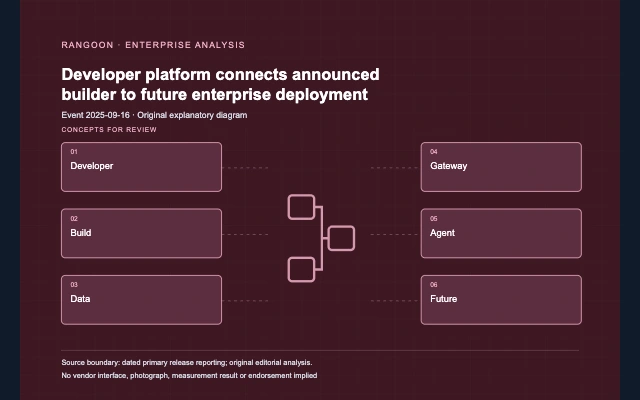
The September release described a future Workday experience in which knowledge, data, action and learning would come together. It said Sana’s search could find information across named enterprise data sources, while Sana Agents could assist with routine workflows and Sana Learn could support AI-native learning. That framing separates useful product roles: retrieval discovers material, an agent proposes or performs a task, and a learning system structures instruction. Combining them can reduce context switching, but it also brings distinct access paths into one user experience. A search result should respect document permissions; an agent action needs a narrowly scoped identity and confirmation; learning material needs a source and update policy. The agreement announcement does not publish those controls for an individual employer, nor does it establish that all listed connections were active.
The November release confirms closing while keeping platform promises separate[source 1][source 2]
On November 4, 2025, Workday announced that it had completed the Sana acquisition. Its release says the addition would bring critical applications and insights into Workday and repeats the stated combination of Sana’s AI-powered search, agents and learning with Workday data and context. The later date provides the needed status update: the companies were no longer only parties to an agreement. Yet the language about delivering a new front door for work remains a direction statement. Completion does not establish the state of every integration, the coverage of an enterprise’s sources, the correctness of an answer or the permissions granted to an agent. Those are observable product and deployment questions that require dated release notes, configuration evidence and operational tests beyond a transaction announcement.
A combined work interface still needs an explicit boundary between information and action[source 1][source 2]
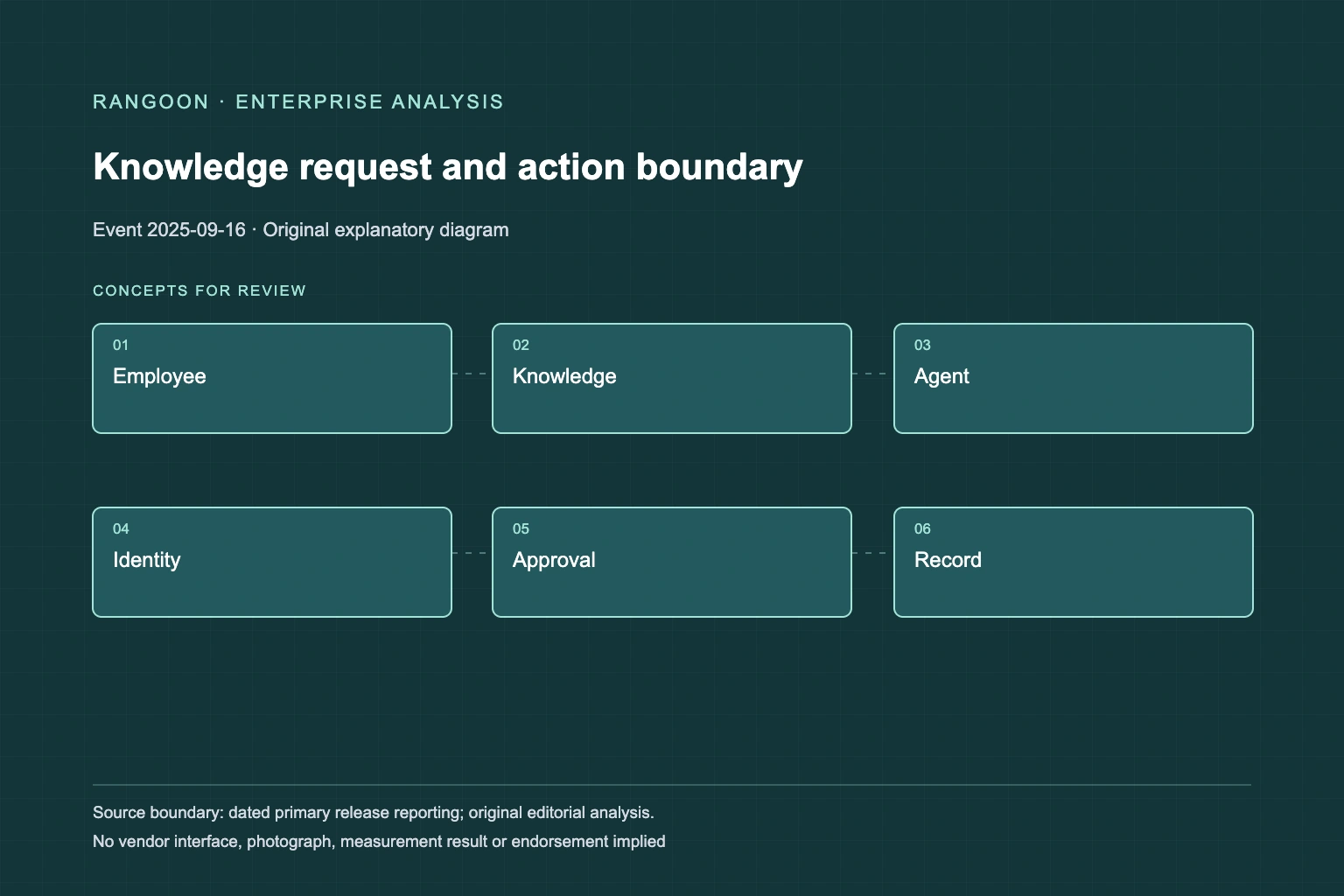
The Workday-Sana sequence illustrates why enterprise AI stories need to preserve both product and transaction state. The sources support reporting a signed agreement in September and a completed acquisition in November, with Workday’s stated intent to combine enterprise knowledge, learning, data and agent functions. They do not demonstrate an authorization decision for a specific workflow. In a production design, a user asking for information may only need document-level access, while an agent changing a record needs identity, role checks, input validation, auditability and often approval. A polished conversational interface can make those different operations appear equally easy. The historic releases are not evidence that they should be treated the same. The useful conclusion is limited to the acquisition and its stated technical rationale, without converting vendor narrative into a productivity guarantee or advice about the companies’ securities.
Sources
- Workday Investor Relations: Workday signs definitive agreement to acquire Sana (September 16, 2025)
- Workday Newsroom: Workday completes acquisition of Sana (November 4, 2025)
Continue reading