

Anthropic’s Singapore MOU: cooperation is not deployment assurance
Anthropic announces a Singapore office and government MOU. Analysis separates international cooperation from workload approval, processing-location evidence and agent authority.
The event date is Anthropic’s announcement date. Company-reported facts are attributed; implementation recommendations are independent analysis. This article does not establish procurement status or interpret the legal force of the MOU.

Key takeaways
- Anthropic announces a Singapore office and government MOU.
- Cooperation and completed workload approval require different evidence.
- Document processing locations, connector scope and action authority separately.
What Anthropic announced[source 1]
On October 14, Anthropic announced a Singapore office and an MOU with the Ministry of Digital Development and Information. The company describes cooperation on AI safety, security, evaluation and responsible adoption, including planned technical exchanges. This is a company account of the announcement. It does not by itself establish that a particular organization has approved a workload, completed a procurement or validated a deployment.
Analysis: separate cooperation from operating evidence
A regional office, a cooperation document and an operating contract answer different questions. An office identifies a local organizational presence. A cooperation announcement describes intended relationships. An engineering review needs records tied to the actual workload: which service and model are used, which account owns them, what data enters the system and which operations the agent may request. Do not collapse those records into a single approved-provider label.
For an American development firm serving overseas customers, begin with a delivery map. Identify the customer owner, the runtime operator, the model endpoint and every connector destination. Keep vendor origin separate from processing location and contractual obligations. A U.S. provider can participate in an international deployment without making all its services interchangeable. The review should identify its assumptions explicitly rather than infer deployment properties from the address of a new office.
Analysis: make processing boundaries testable
Describe each data path with enough detail for an operator to verify it. Record endpoint configuration, region selection where applicable, storage and logging destinations, credential ownership and permitted fallback behavior. Include what happens when the preferred endpoint fails: an undocumented retry through another service can invalidate the assumptions behind an otherwise careful review. Test the failure path as well as the successful request.
Approval should apply to an exact operating configuration, not to a marketing category. Where regional processing is required, retain the applicable service documentation and contract terms with the configuration version. Avoid equating inference location with every other data handling question: retention, support access, telemetry and connected business systems need their own evidence. These are review questions, not claims that the announcement resolves or violates any specific jurisdictional requirement.
Sources
- Anthropic: Singapore office opening and government MOU (October 14, 2026)
Continue reading
Related reading
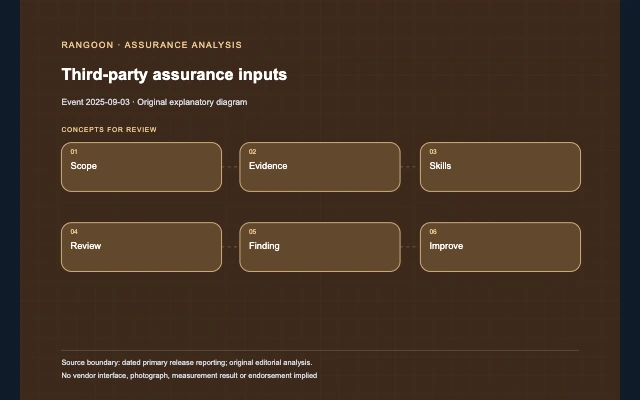 News analysisUK’s third-party AI assurance roadmap mapped professionalization, information access and a planned innovation fund3 min read
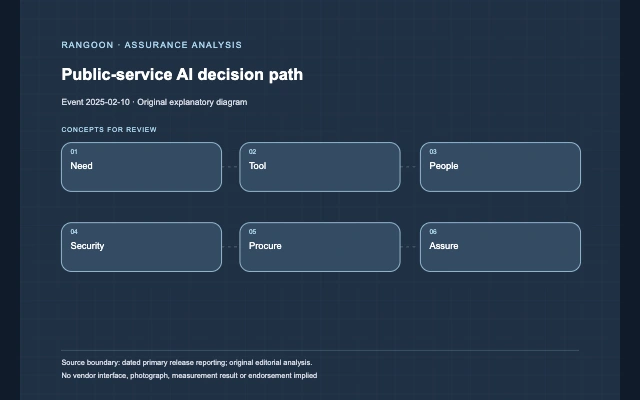 News analysisUK’s AI Playbook expanded government guidance to ten principles across selection, deployment and assurance3 min read
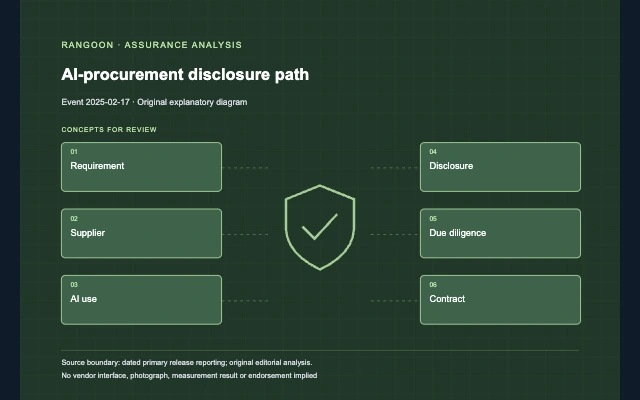 News analysisUK republished PPN 017 under new procurement terminology while preserving its optional AI-transparency questions3 min read