Chai-2 paired de novo antibody designs with a bounded wet-lab report
Chai Discovery posted its Chai-2 antibody-design study in July 2025, reporting zero-shot designs and a specified set of wet-lab tests.
Historical reporting: Chai Discovery’s Chai-2 bioRxiv paper posted July 6, 2025; its dated technical report records the supplied experimental scope. Reported hit rates remain study-specific and do not establish clinical efficacy, safety or general antibody-design performance.
Key takeaways
- Chai-2 reported a defined de novo antibody and miniprotein design study with wet-lab testing.
- Reported hit rates depend on targets, construct formats, assays and selection rules.
- A binder result is not a therapeutic safety or efficacy result.
The relevant event is a July research posting, not a September release[source 1][source 2]
Chai Discovery’s Chai-2 study was posted to bioRxiv on July 6, 2025, following a dated June technical report. The sources describe a multimodal generative approach to de novo antibody and miniprotein design and a specified wet-lab testing program. This article uses the dated primary records rather than an unverified September label. The reported outcomes belong to the named targets, formats and assays. They do not show that every generated antibody will bind, that a successful binder is safe, or that the work establishes a clinical treatment result.
Zero-shot design still has a target and assay distribution[source 1][source 2]
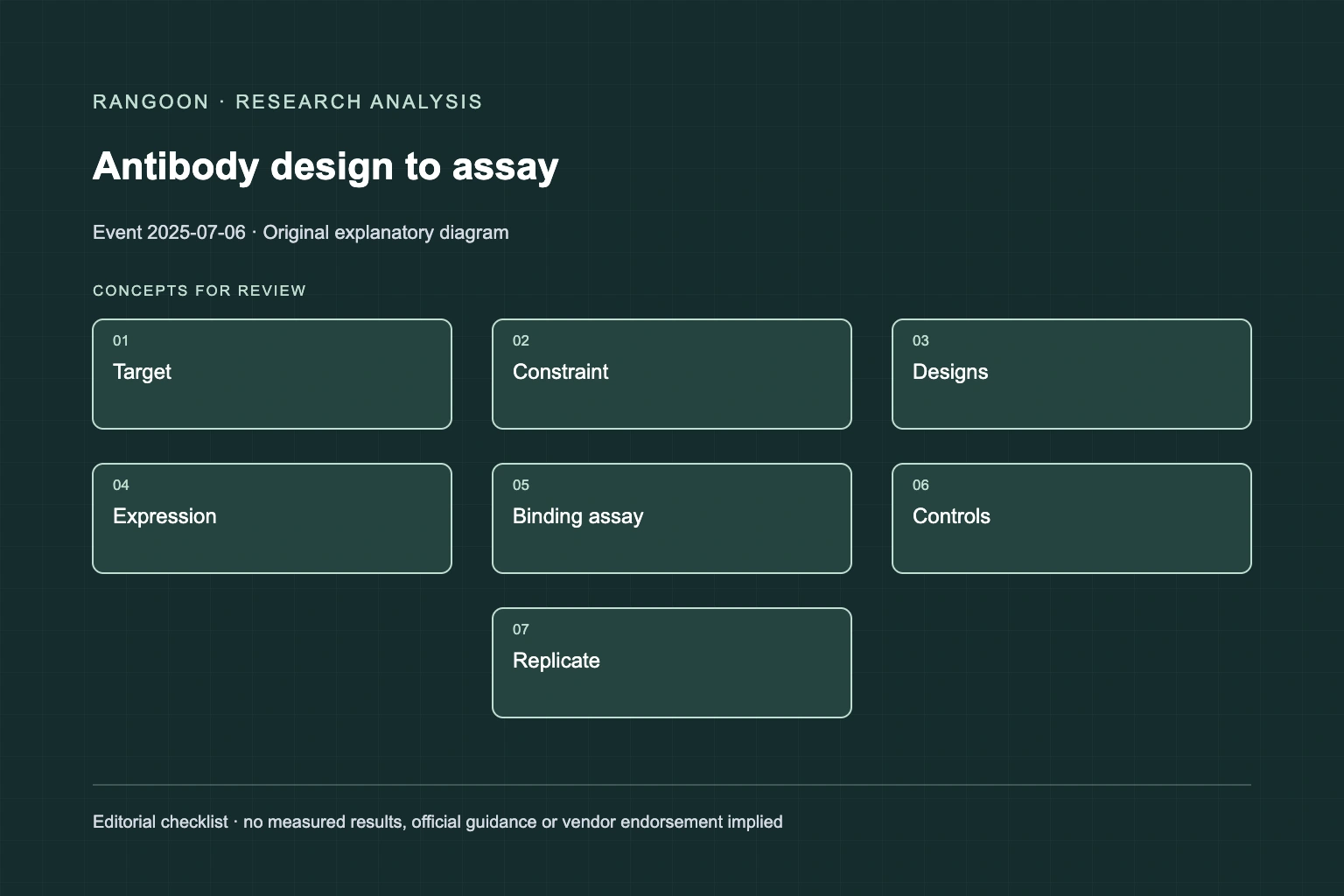
A design model receives a representation of a molecular target and constraints, then proposes sequences or structures to be tested. Its hit rate depends on target selection, epitope specification, candidate count, construct format, expression and the definition of a successful measurement. A seemingly strong aggregate result can conceal variation across target classes. The study’s wet-lab component is more informative than a purely in-silico score, but it remains a specific experiment with company authors, selected protocols and stated limits. Replication by independent groups and broader target sets are separate evidence.
Binding evidence does not establish therapeutic benefit[source 1][source 2]
Antibody discovery is followed by many questions: affinity under relevant conditions, specificity, developability, pharmacology, toxicity, manufacturing and clinical performance. A designed binder can be scientifically useful without becoming a drug candidate. Reports should label an assay result by what it measured and refrain from converting it into a disease claim. This article provides no clinical or laboratory guidance. Its focus is the evidence boundary between a model-generated design, a reported in-vitro test, and the far broader body of work required to support a therapeutic conclusion.
Evaluation should publish target selection and all tested outcomes[source 1][source 2]
A prospective design evaluation should lock the target list, acceptable epitopes, candidate budget, assay endpoint and pass threshold before model output is viewed. Publish the complete tested denominator, including expression failures and inactive sequences, so a hit rate remains interpretable. Use blinded or independently replicated assays where feasible and compare against a predeclared conventional design baseline. For target classes excluded from the study, state the gap rather than inferring transfer. These practices help distinguish a real selection advantage from a favorable experimental subset.
Analysis: wet-lab validation narrows a claim without ending the evidence chain[source 1][source 2]
Chai-2 is notable because its report connects computational designs to a defined wet-lab program. That is stronger evidence than a rendering or docking score, yet it is still one point on a longer evidence chain. Editorially, retain the model, target, assay and candidate budget together whenever reporting the result. This is original analysis. The July paper and technical report support a dated study, not a general performance promise or medical claim. Independent replication and downstream characterization determine whether a reported design result becomes durable knowledge beyond the original experiment.
The difference between a designed binder and a useful therapy is large enough that every experimental endpoint should be stated before audiences infer a health outcome.
Sources
- bioRxiv: Zero-shot antibody design in a 24-well plate (July 6, 2025)
- Chai Discovery: Chai-2 technical report (June 30, 2025)
Continue reading