Google described multimodal AMIE as a research diagnostic-dialogue agent
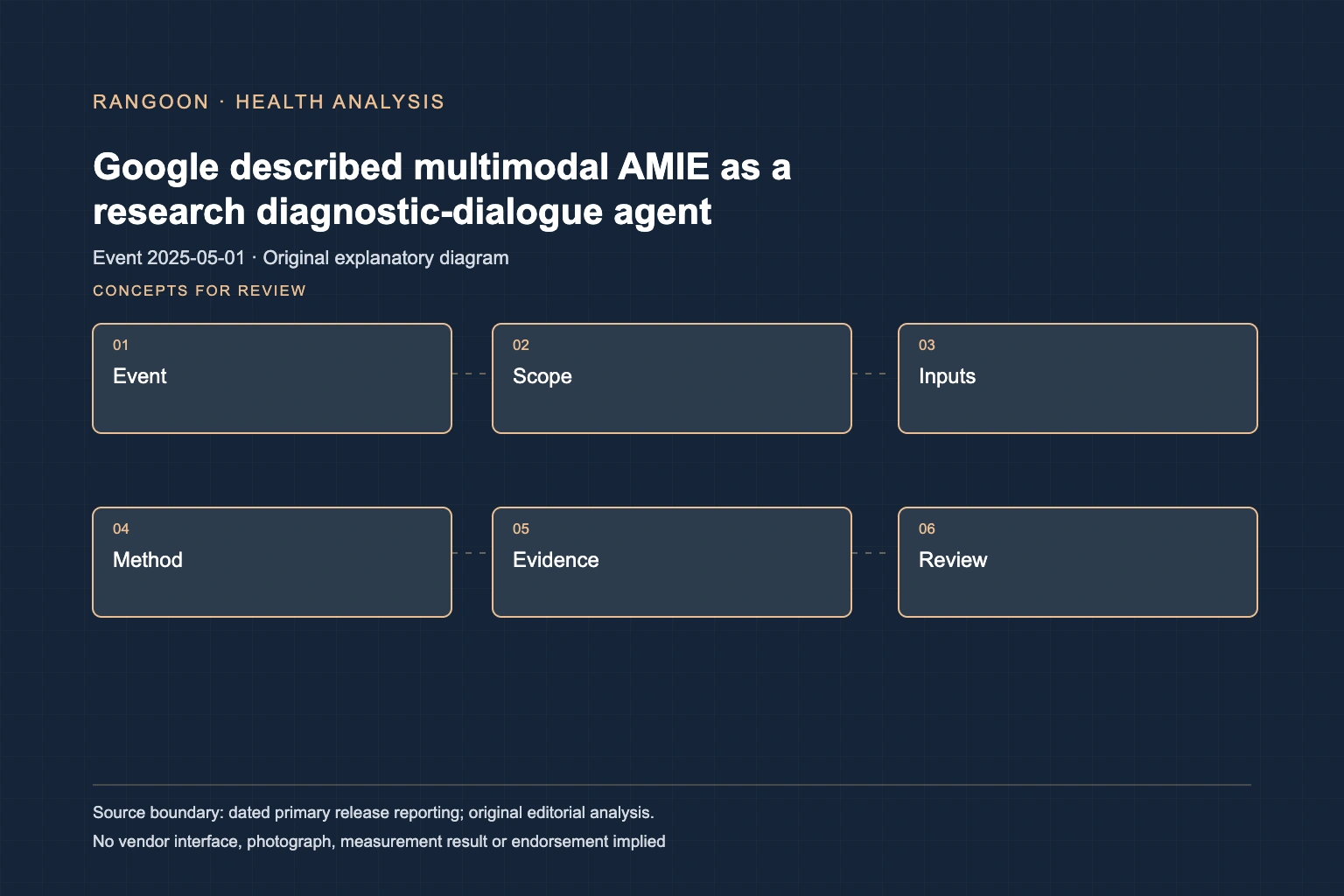
Google Research presented multimodal AMIE on May 1, 2025, extending its research diagnostic-dialogue work to images and documents in simulated conversations.
Historical reporting: Google Research dates the multimodal AMIE research post to May 1, 2025. The public AMIE project page was freshly read as current project context; both sources describe research, not a clinical product or medical advice.
Key takeaways
- The May event was a research demonstration of multimodal diagnostic dialogue, not clinical deployment.
- Google described image and document inputs within simulated conversations, with a separate evaluation record needed for real care.
- A research comparison with clinician participants does not establish diagnostic authorization, availability or patient benefit.
The May post identified a multimodal research extension[source 1][source 2]
Google Research published its AMIE gains vision post on May 1, 2025. It described a research agent that could use text alongside images and documents during diagnostic dialogue, extending earlier text-only work. The event is therefore a change in the research configuration, not an announcement that AMIE was available to patients or clinicians. Google framed the work as a demonstration with simulated conversations. That distinction matters because a model that can accept a modality in a study has not thereby established data governance, intended use, clinical workflow integration or prospective evidence in a care setting.
The public project record separates research capabilities from deployment[source 1][source 2]
The AMIE project page presents the effort as collaborative research across Google Research, DeepMind, Platforms and Devices, and Google for Health. The May post focuses on how multimodal material can change a conversation: images and documents may contain information that a text transcript omits. That is a method claim about inputs and reasoning context. It does not identify a released medical-device software function, a diagnostic code, a hospital integration or a patient-facing service. The archive therefore reports the stated research interface without inferring a regulated product status from a research demonstration.
Simulated comparison is a defined evaluation setting[source 1][source 2]
Google described comparisons using simulated diagnostic conversations and clinician evaluation. Those study conditions are meaningful because they name the setting in which claims were examined, but they do not make a score a general care outcome. A dialogue agent can be evaluated on the material supplied in a scenario while real encounters include incomplete records, changing symptoms, local practice and accountability. The primary records also do not establish independent replication, an authorization decision or a clinical deployment date. The historical event supports discussion of a multimodal research protocol, not a recommendation about diagnosis or treatment.
The status change was research scope, not clinical availability[source 1][source 2]
The source-specific change in May was the addition of multimodal diagnostic-dialogue research to AMIE’s published record. The useful technical question is which modality, conversation setup and evaluation protocol a later report uses, because those elements define what was actually studied. It would be inaccurate to turn image-and-document capability into a claim that the agent reads every clinical image or replaces a specialist. The project material continues to describe AMIE as research. The archive preserves that boundary: public research communication can establish a method and a date, while clinical validation, authorization and deployment require separate records. The May materials specifically put images and documents beside text in simulated dialogue, which is a narrower claim than general multimodal diagnosis. That declared input boundary is the relevant comparison point for later AMIE reports.
Sources
Continue reading