Gemini CLI extensions made tool packaging a terminal-agent governance concern
Google introduced Gemini CLI extensions on October 8, 2025 as installable integrations that bundle tools and playbooks for terminal workflows.
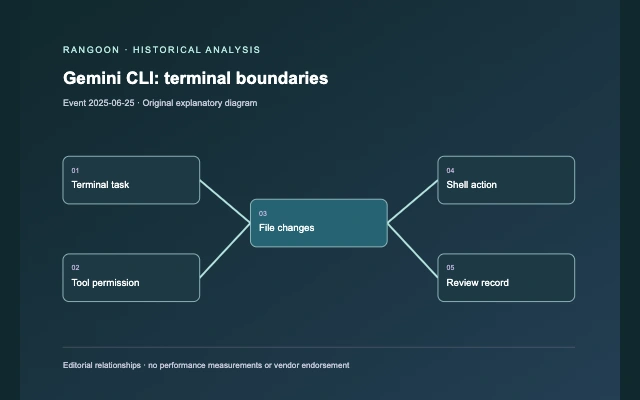
Historical reporting: Google’s October 2025 extensions post and June CLI launch are first-party records. No current extension compatibility is asserted.
Key takeaways
- An extension package should have an accountable owner and version.
- Tool playbooks must not override repository policy.
- Installation review should include network and credential behavior.
Google described extensions as packaged integrations and playbooks[source 1][source 2]
Google’s October 8, 2025 post announced Gemini CLI extensions as installable integrations for external tools, describing bundled playbooks that teach the agent how to use those tools. The June launch had established Gemini CLI as an open-source terminal agent with MCP and extension support. The later post shows an ecosystem packaging step. It does not establish that every partner extension is equally maintained, safe for every repository or authorized to reach a team’s data.
A package combines more than an MCP connection[source 1]
Google’s October post described extension packages containing MCP servers, context files, excluded tools and custom commands in any combination. It also introduced a discovery page and named partner integrations across design, observability, commerce and APIs. This separates the package layer from the MCP transport underneath it: a connection exposes tools, while an extension can also change the instructions and commands a developer encounters. The distinction matters when comparing two packages that reach the same external service but present different workflows.
A playbook can guide an agent but cannot be trusted as policy[source 1][source 2]
An extension may include instructions, executables, configuration and requests for credentials. Those are supply-chain and authorization surfaces. Read the package source or signed manifest, pin a version, identify the outbound domains and limit the credential scope. Treat any embedded guidance as untrusted relative to repository policy. If an extension claims to deploy or administer a service, the host should require a separate human authorization boundary before it reaches a live environment.
Adopt extensions through a disposable test repository first[source 1][source 2]
Install a candidate integration in a fixture repository with synthetic data and a deny-by-default network policy. Observe files read and written, commands issued, token requests and external calls. Require an uninstall and rollback path, then document the approved version and owner. Re-run the fixture when the extension changes. This small procedure gives maintainers concrete evidence instead of relying on marketplace description text or a successful first run.
Analysis: package ecosystems shift review from prompts to provenance[source 1][source 2]
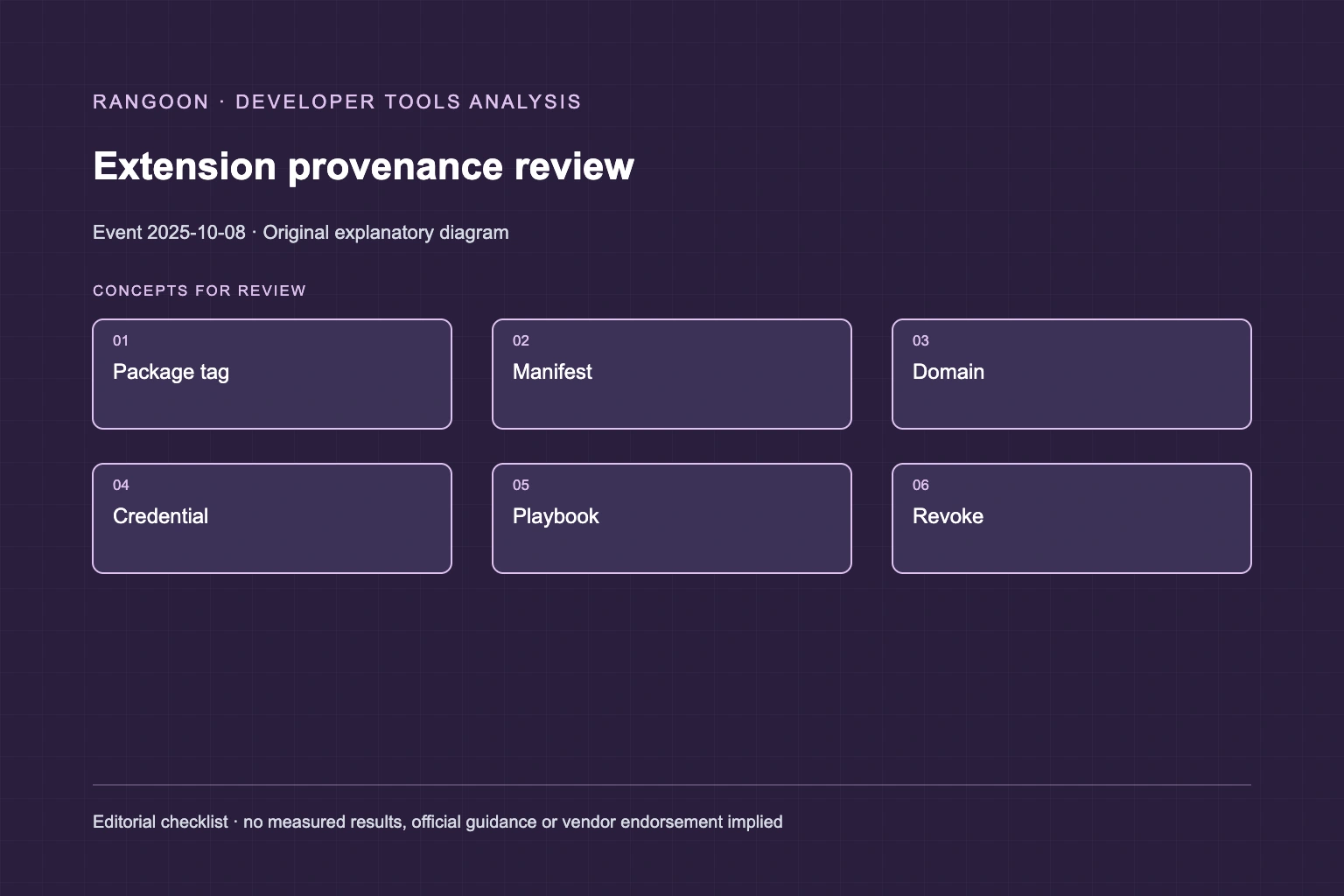
Editorial analysis: extensions are useful because they package repeatable knowledge, yet that same packaging can hide broad capability behind an easy install command. Teams should use a provenance mindset: who built it, what exact version runs, which dependencies execute and how can it be revoked? That approach keeps terminal customization compatible with ordinary change-management practice.
Google’s October post called extensions installable integrations that bundle tools with reusable playbooks, extending a terminal agent beyond a single model-and-shell loop. The package boundary matters: a playbook can steer tool use while bundled configuration can name commands, services or credentials the base CLI did not previously need. Review the exact package tag or checksum, manifest, executable entry points, outbound domains and requested identity scope before installation.
Where two extensions expose the same integration, choose one through an explicit owner decision and record its rollback path. Test removal while a session is idle and while an agent has queued work, then verify the revoked integration cannot perform a delayed call. This turns the release’s packaging model into an inspectable provenance chain instead of treating convenience installation as compatibility proof.
Sources
- Google: Gemini CLI extensions (October 8, 2025)
- Google: Gemini CLI launch (June 25, 2025)
Continue reading