Veo 3 made audiovisual generation a multi-stage verification task
Google announced Veo 3 on May 20, 2025, presenting a video-generation model in a launch that also introduced Flow and stated SynthID watermarking coverage.
Historical reporting: Google announced Veo 3 on May 20, 2025. This does not claim current access, output quality, watermark detection, or suitability for a particular use.
Key takeaways
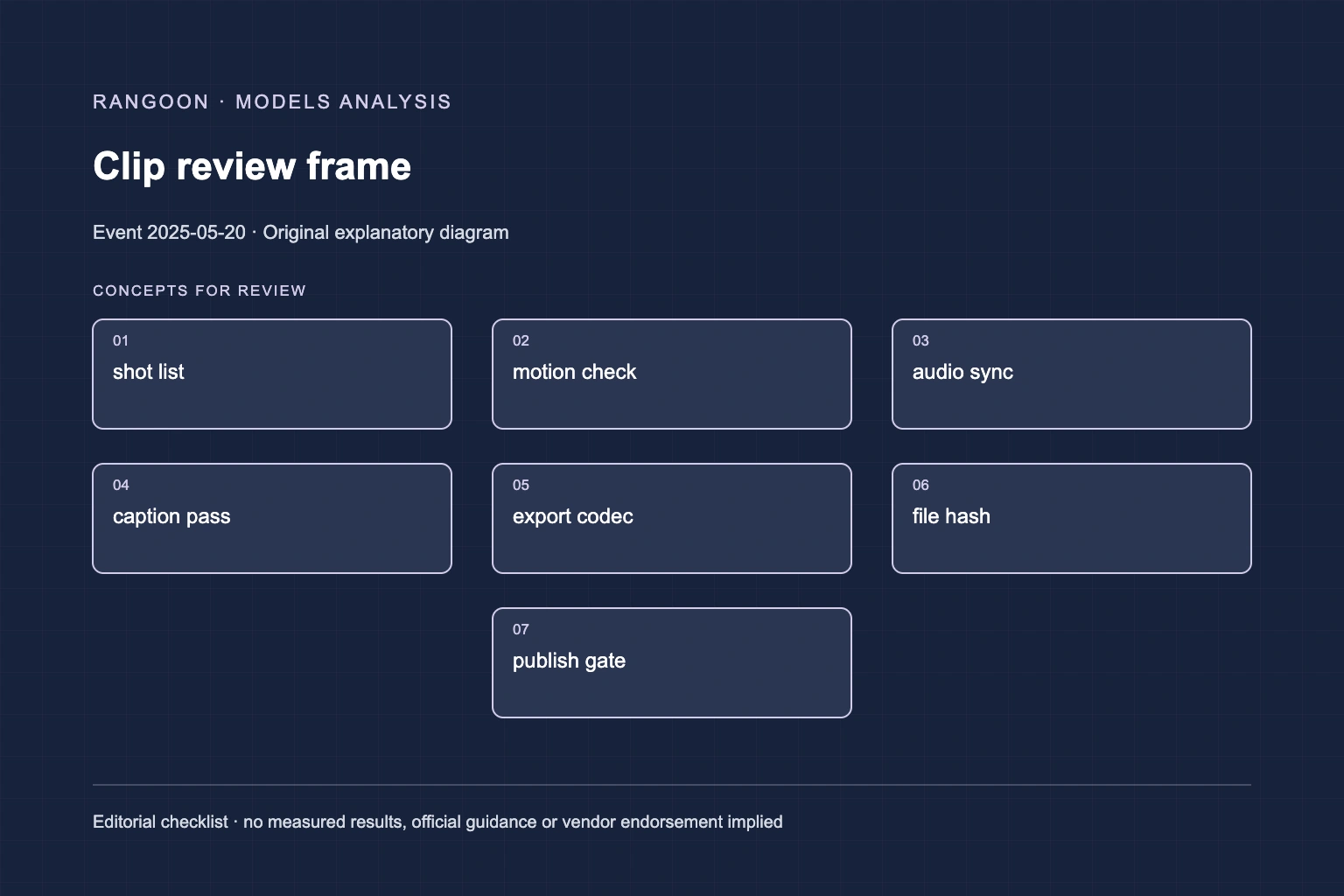
- Video review must inspect picture, audio, continuity, and metadata.
- A prompt and a rendered clip are different evidence objects.
- Editorial approval should bind to an exact output hash.
Release record[source 1][source 2]
Google announced Veo 3 on May 20, 2025 as part of a generative-media release that also introduced Flow and Imagen 4. The launch page says Veo 3 was one of Google DeepMind’s newest video models, and Google’s I/O recap separately describes its role in creative production. Those sources date the event and state Google’s framing.
Technical design[source 1][source 2]
They do not establish that every generated clip is accurate, safe, watermark-detectable, or fit for publication. Video is a compound artifact. A single output may include visuals, sound, spoken language, timing, captions, transitions, and references that only emerge after rendering.
Operating boundary[source 1][source 2]
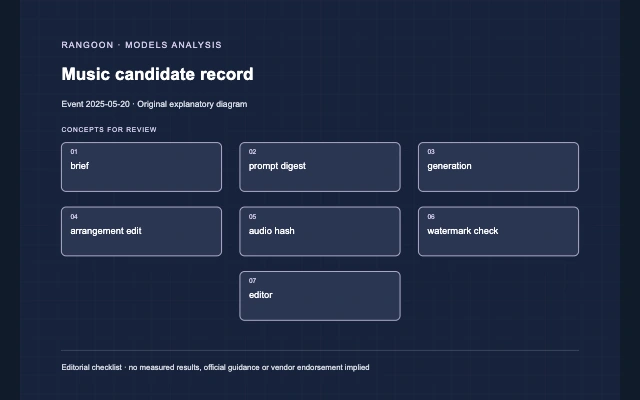
Evaluation needs a shot-level process: inspect the intended scene, continuity across edits, synchrony between audio and visuals, depiction of people or places, and metadata on export. A prompt can describe an acceptable goal while the actual clip violates a policy or introduces a factual implication. Store the prompt or a privacy-safe digest, model setting, source inputs, generated candidate identifier, edit history, output hash, and reviewer outcome.
Evaluation evidence[source 1][source 2]
The May launch noted SynthID watermarking for Veo 3 outputs. That is useful provenance context, but it does not settle provenance in isolation. A missing, altered, or unreadable signal should trigger an uncertainty state, not a claim that the content is human-made or unencumbered.
Historical implication[source 1][source 2]
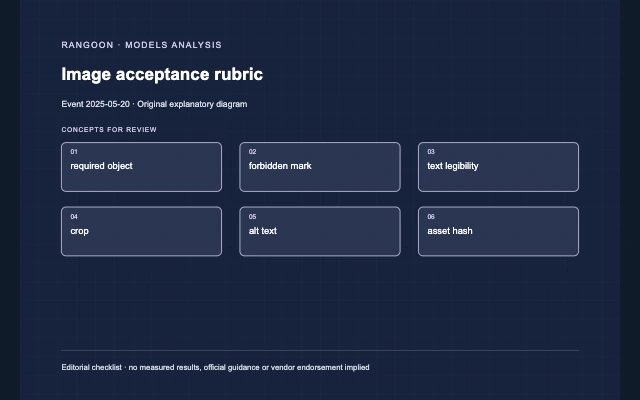
Keep rights review, consent checks, and publication decisions in their own records. For tests, use a defined rubric rather than a broad instruction to judge realism. Include facts that should remain stable, physical actions that should be plausible, dialogue that should not misrepresent a person, and clips where a refusal or a label is expected.
Test at the intended distribution resolution and compression, since artifacts may become visible only after export. For a product workflow, prohibit automatic publication from model output alone. Require a human or deterministic review gate and retain the exact approved file.
The historical event is a model announcement, not an assurance. Its lasting engineering value is a reminder that audiovisual generation couples many failure surfaces. A responsible operation tests the rendered artifact, preserves an editing trail, and describes its provenance signals with limited, evidence-bound language.
A video can pass a first-frame review and still fail in motion, sound, or the final seconds. Sampling the whole clip, listening with captions enabled, and reviewing the compressed delivery file turn an attractive demo into an inspectable publishing artifact. Where a clip makes a factual claim, pair it with conventional reporting evidence in the story record; visual plausibility alone cannot serve as the source for the claim.
The review record should include the audience and placement, because a harmless experimental clip may demand a different standard when presented beside factual reporting or advertising. Retaining the evaluation rubric also lets a later editor assess whether standards changed, instead of mistaking inconsistent review for an unexplained model difference.
Sources
- Google: Generative media models and tools at I/O 2025 (May 20, 2025)
- Google: How generative AI was used at I/O 2025 (May 20, 2025)
Continue reading