

Microsoft announced a planned Pecos campus and dedicated power path, keeping its two-gigawatt figure separate from operation
Microsoft announced plans for a Pecos, Texas data-center campus on June 22, 2026, citing approximately two gigawatts of future capacity and an onsite power design.
Historical reporting: Microsoft announced plans on June 22, 2026 to build a new data-center campus outside Pecos, Texas. Microsoft said the project would expand global capacity by approximately two gigawatts over five to seven years and that it planned a co-located natural-gas power facility at launch. A same-day Microsoft Local letter independently describes plans to build new data centers outside Pecos and says operational roles would exist once the campus was running. These are planning and design records. The two-gigawatt figure, job figures, water claims and environmental controls are Microsoft statements about future construction and operations. They do not prove delivered capacity, commissioning, resource use, grid effect, customer availability, or a climate outcome.
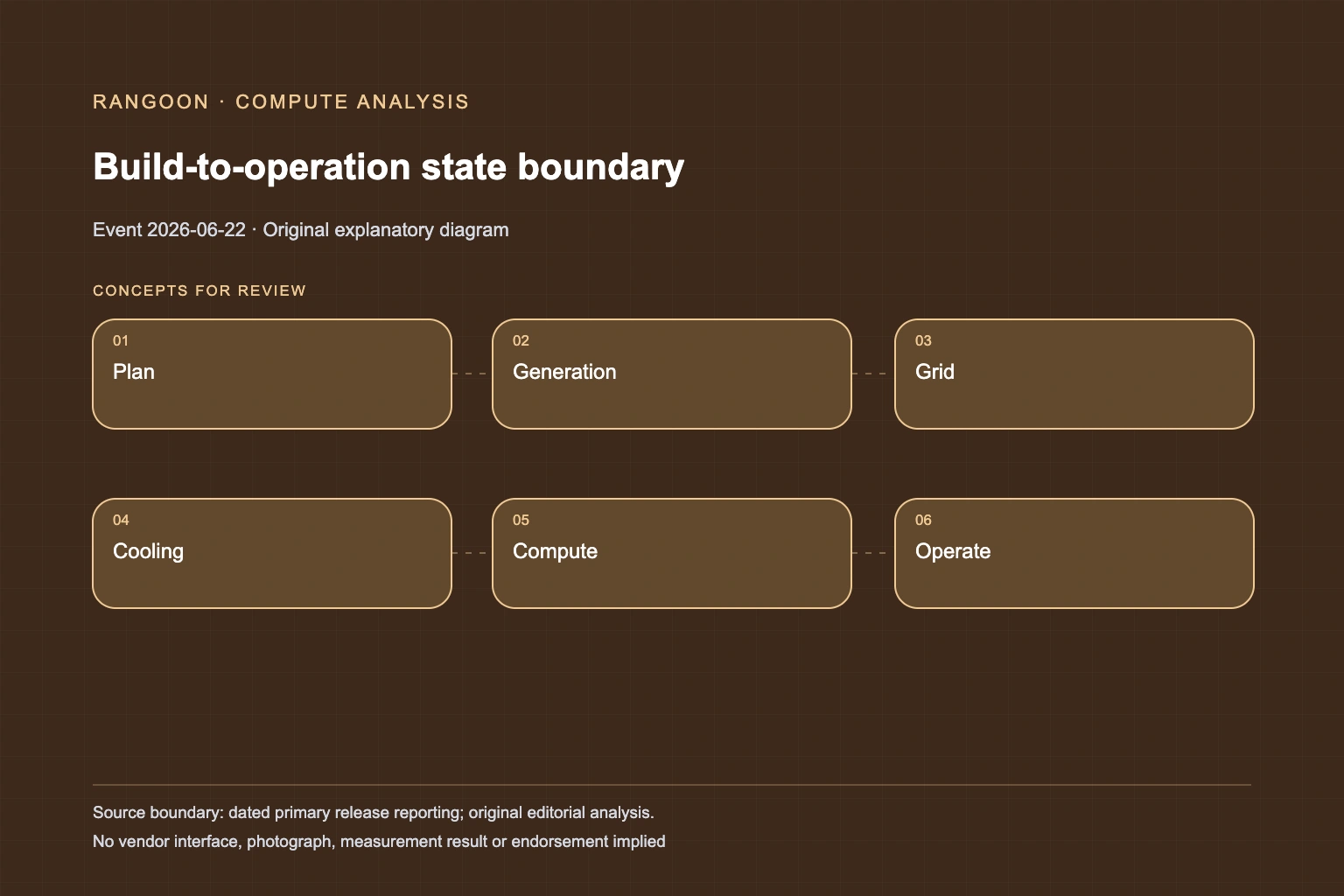
Key takeaways
- June 22 announced a future Pecos campus; Microsoft’s own wording puts operating roles after the campus is running.
- Approximately two gigawatts was a future capacity-expansion figure over five to seven years, not an energized June 2026 total.
- The planned behind-the-meter power and closed-loop cooling design need later operational measurements before environmental conclusions.
Microsoft announced a plan to build a Pecos campus with a multi-year delivery horizon[source 1][source 2]
On June 22, 2026, Microsoft announced plans to build a new data-center campus in Pecos, Texas. The company described it as one of its largest single capacity additions and said the investment would unfold over the next five to seven years. That language establishes a site-development and construction-plan milestone. It does not establish a live region, available cloud service, completed building or installed accelerator fleet on the event date. Microsoft’s same-day letter to the Pecos and Reeves County community also uses future language: it says the company is announcing plans to build new data centers and refers to long-term operational roles once the campus is running. The two records therefore agree on the key state boundary. The announcement is important evidence of intended infrastructure, but it is not a commissioning receipt.
The approximately two-gigawatt statement was an expansion target, not a measured active load[source 1]
Microsoft said the Pecos campus would expand its global data-center capacity by approximately two gigawatts to meet demand for AI and cloud services. The same release places the multibillion-dollar investment over five to seven years. These phrases define scope and timeframe, not a current meter reading. The announcement does not report how much power had been contracted, generated, connected, delivered to servers or accepted by any workload on June 22. It also does not identify the hardware configuration, server count, chip type, storage capacity or network fabric that would consume the stated power. A gigawatt-scale announcement can be technically meaningful while remaining a future capacity plan. Subsequent reporting should distinguish land and permits, generation construction, transmission connection, building completion, electrical energization, equipment installation and workload commissioning rather than treating one headline figure as all of them.
The onsite power and cooling descriptions are planned operating design, not a completed environmental result[source 1]
Microsoft said that at launch the campus would operate with a co-located natural-gas power facility in a behind-the-meter arrangement, and that it planned closed-loop cooling systems. It described future emission controls and a later connection to the broader grid. Those statements make the energy design unusually concrete, but they remain conditional on construction and operation. The page does not report plant commissioning, fuel use, emissions measurements, cooling-water draws, backup-power testing, grid interconnection status or a lifecycle assessment. It also says Microsoft already had renewable-electricity contracts in Texas, but does not allocate a specific contract volume to Pecos. Renewable procurement elsewhere, a planned gas facility, site water design and eventual grid connection are different claims with different boundaries. The announcement supports reporting Microsoft’s stated design, not that the future campus had achieved a specified environmental performance.
Construction and employment estimates did not establish a workload, customer service or local outcome[source 1][source 2]
Microsoft said it expected the project to support more than 6,000 construction jobs at peak build-out and hundreds of permanent roles when operational. Its local letter describes planned workforce engagement, skills programs and community outreach. These are useful commitments and estimates, not evidence that the jobs, programs or services had already materialized. The sources also do not identify a first customer, workload class, service region, availability date, access policy, pricing or reliability target. AI and cloud demand is Microsoft’s stated reason for the campus, but it does not specify which model, tenant or product will use the planned capacity. The defensible historical claim is that Microsoft announced a long-horizon Pecos development and described its intended power and community approach. Proof of an operating data center requires later dated construction, energy, systems and workload evidence.
Sources
- Microsoft Blog: Powering the next wave of AI with a new Pecos datacenter (June 22, 2026)
- Microsoft Local: Open letter to Pecos and Reeves County (June 22, 2026)
Continue reading
Related reading
 News analysisFairwater announcement made a data center an interconnected-system claim3 min read
 News analysisOpenAI, Nscale and Aker announced Stargate Norway as a planned Narvik facility, not live European compute3 min read
 News analysisTrainium2 availability turned chip claims into an instance-design question3 min read