

Claude Frontier Academy: assess deployment skills beyond the credential
Anthropic’s engineer-training commitment raises a practical question for development firms: what evidence shows that an AI workflow is ready for a client handoff?
Underlying source event: 2026-10-02. Rangoon publication: October 10, 2026. Source facts and independent operator analysis remain distinct; no integration or endorsement implied.

Key takeaways
- The announced $100 million is a company commitment, not evidence of completed spending or a government award.
- Review delivery artifacts and failure handling alongside any engineer credential.
- Assign client approval and operational ownership separately from implementation work.
What Anthropic announced[source 1]
On October 2, Anthropic announced Claude Frontier Academy with a $100 million commitment and a goal of training 10,000 engineers by the end of 2027. Those figures describe an announced commitment and target, not completed expenditure or graduates.
The program begins with in-person instruction and a practical assessment. Those who pass earn the Claude Resident Engineer badge and enter a 12-week residency leading a project inside their organization. A further assessment precedes the final Frontier Deployed Engineer credential; Anthropic expects the first in early 2027. Organizations nominate participants.
Analysis: ask for a delivery record, not only a badge[source 1]
For a development firm selecting an implementation lead, the useful question is whether that person can turn a business requirement into a bounded, testable system. A credential can inform staffing discussions. It should not replace inspection of the proposed workload, the access it needs, or the evidence supporting a release decision. This is Rangoon’s engineering analysis, not an additional requirement attributed to the Academy.
Consider a document-processing assistant for a client operations team. A useful handoff identifies the input formats, permitted data, destination system, human decision points, failure modes and accountable owner. It also states whether the assistant drafts a recommendation or writes a record. Those two behaviors can look similar in a demonstration while creating very different operating responsibilities.
Ask the engineer to demonstrate the exact configuration being handed over. Retain the model and tool versions, representative test inputs, expected outcomes and observed failures. Record what happens when credentials expire, a dependency becomes unavailable or a document contains instructions that conflict with the intended task. A successful demonstration without those boundaries gives the receiving team little basis for troubleshooting.
Analysis: make the client handoff reproducible[source 1]
A practical acceptance exercise should let someone outside the implementation team repeat the checks. Provide a small sanitized evaluation set, instructions for running it, expected evidence and a clear statement of known gaps. Separate model-output quality from authorization behavior: a correct answer does not prove that a subsequent write was permitted, and a denied write does not explain whether the answer was accurate.
For consequential actions, include a negative case. Change the target resource or requested operation after approval and verify that the system does not silently reuse the old decision. Simulate an interrupted external request and preserve uncertainty until the result can be reconciled. These are suggested engineering exercises, not claims about the training curriculum or any particular vendor’s implementation.
Complete the handoff by naming the client owner who accepts the workload, the operator who can suspend it, and the person responsible for recovery. Specify what support the delivery firm provides and which access ends when the engagement closes. That makes the resulting system easier to operate even when the original engineer is no longer available.
What the announcement does not establish[source 1]
The funding announcement alone does not establish independently measured deployment outcomes, a completed training target, or readiness of a particular client system. Teams should assess those questions through project-specific evidence. Readers considering participation should use the official program information for current eligibility; this article offers no enrollment, certification or procurement advice.
Sources
- Anthropic: Claude Frontier Academy announcement (October 2, 2026)
Continue reading
Related reading
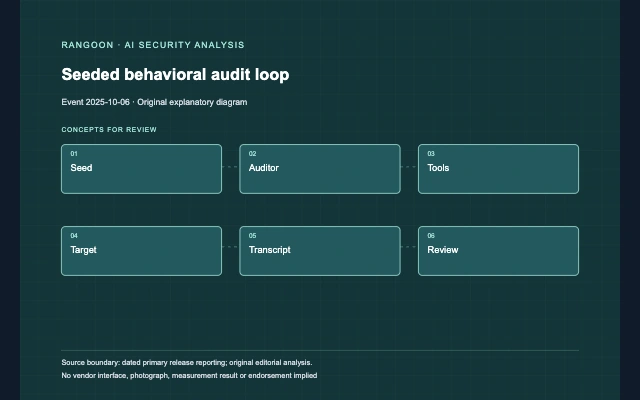 News analysisAnthropic released Petri for broad alignment audits, while its generated transcripts still needed human interpretation3 min read
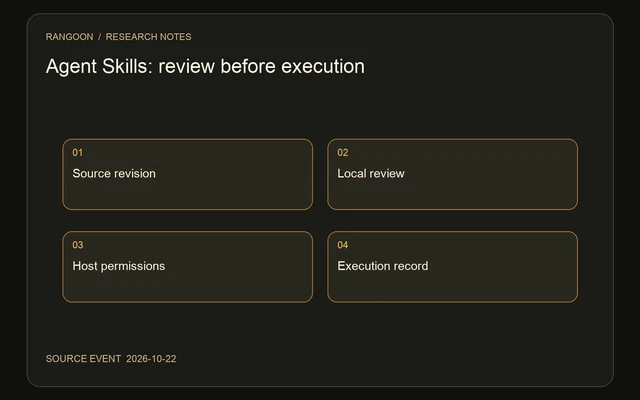 News analysisAnthropic donated Agent Skills to AAIF: treat open governance as a new supply-chain input3 min read
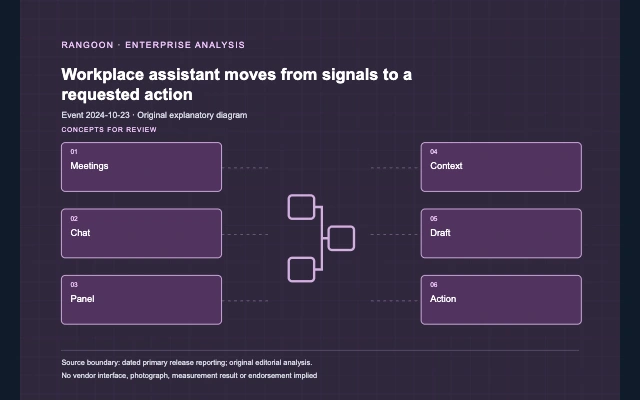 News analysisZoom released AI Companion 2.0 as a cross-Workplace context and action surface3 min read