Claude Code’s general availability joined a model launch to a developer workflow claim
Anthropic announced Claude Code general availability on May 22, 2025 alongside Claude 4, native IDE integrations and GitHub Actions tasks.
Historical reporting: Anthropic’s May 22, 2025 Claude 4 announcement says Claude Code became generally available. The article does not claim current product terms.
Key takeaways
- Model launch dates and coding-tool release dates need separate evidence.
- IDE edits should remain reviewable as ordinary repository changes.
- Background task availability does not remove acceptance ownership.
Anthropic moved Claude Code from research preview to general availability[source 1][source 2]
Anthropic’s May 22, 2025 Claude 4 release says Claude Code became generally available after a research preview. The announcement also named background tasks through GitHub Actions and native VS Code and JetBrains integrations. The February announcement provides the contrast: it described Claude Code as a limited research preview accompanying Claude 3.7 Sonnet. Those two dated records establish the product transition without proving that any particular repository was suitable for autonomous editing.
IDE visibility is useful only if the repository remains the source of truth[source 1][source 2]
An editor integration can make an agent’s edits easier to inspect, but the authoritative artifacts are still the diff, tests, branch protections and review record. A team should verify what the agent can read, what commands it may execute, how it receives tool output and whether generated files enter the change set. Mixing a model announcement with a code-review decision is a category mistake: one describes capability; the other is a local judgment about behavior and risk.
Use a preflight fixture before allowing a new coding agent into a shared branch[source 1][source 2]
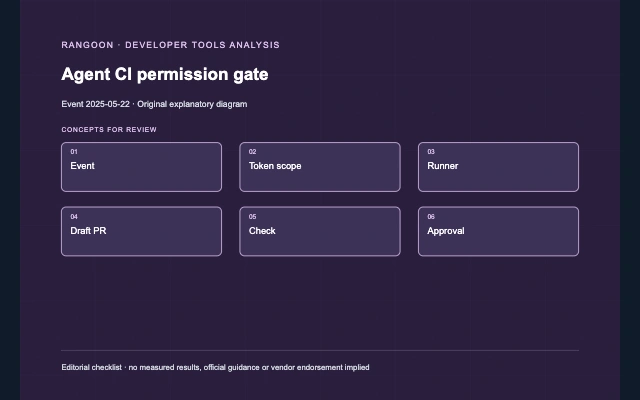
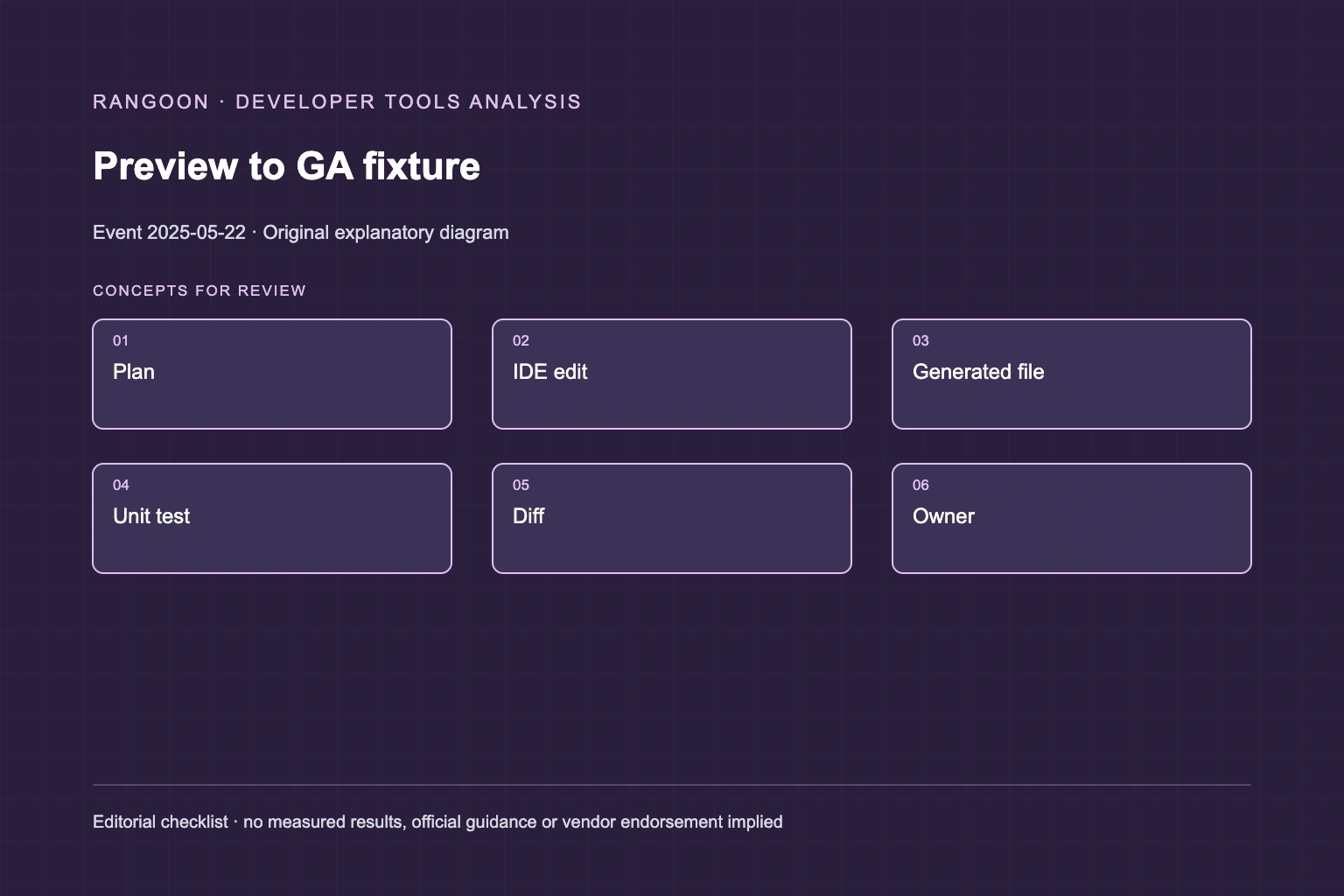
Prepare a small task that requires reading a convention file, changing one implementation file and running one focused test. Add a refusal case for a forbidden file and a failure case for an unavailable dependency. Save the transcript only as supporting evidence; the pass condition is the repository state and the command output. If the task needs a token, production data or deployment action, split that work into a human-owned step with a separate approval gate.
Analysis: general availability changes procurement questions, not engineering judgment[source 1][source 2]
Editorial analysis: a general-availability label can justify broader evaluation, but it does not answer whether a team has reliable tests, scoped instructions or review capacity. Adoption should begin where a failed patch is easy to detect and revert. The stronger signal is repeatable task evidence across a representative codebase, including rejected changes, rather than a model launch headline or a successful demo.
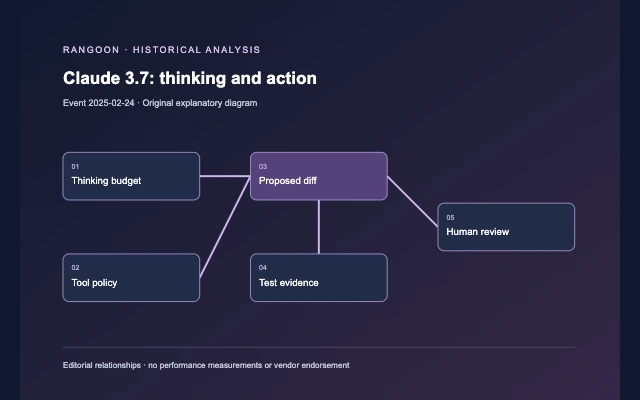
Anthropic paired the Claude 4 launch with extended thinking that could alternate with tool use, parallel tool calls, and stronger instruction following. It also said that, when developers granted access to local files, the models could extract and save key facts for continuity. Those details matter because a coding session may now combine planning, filesystem context and several tool results before it creates a patch.
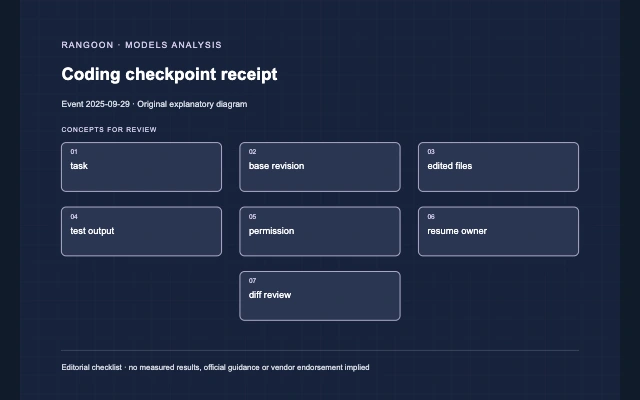
Claude Code’s GA framing therefore benefits from a change receipt that separates model context from files actually modified: list the initial revision, tools invoked, generated outputs and commands that altered the tree. Persistent facts should be visible, scoped to the project and removable; otherwise a stale local convention can quietly outrank the current branch. Parallel tools can shorten a read phase, but their outputs still need one reconciled plan before edits begin.
The announcement paired these workflow claims with Opus 4 and Sonnet 4, so model capability and tool permission should be reviewed as separate variables.
Sources
- Anthropic: Introducing Claude 4 (May 22, 2025)
- Anthropic: Claude 3.7 Sonnet and Claude Code (February 24, 2025)
Continue reading