The Copyright Office put human authorship at the center of AI-output analysis
The U.S. Copyright Office released Part 2 of its AI report on January 29, 2025, explaining how human authorship shapes copyrightability of generative-AI outputs.
Historical reporting: the U.S. Copyright Office released Part 2 of its multipart AI report on January 29, 2025. The report analyzes copyrightability of generative-AI outputs and states the Office’s conclusions about existing copyright principles; it is not a statute, court decision, or automatic registration result for a particular work.
Key takeaways
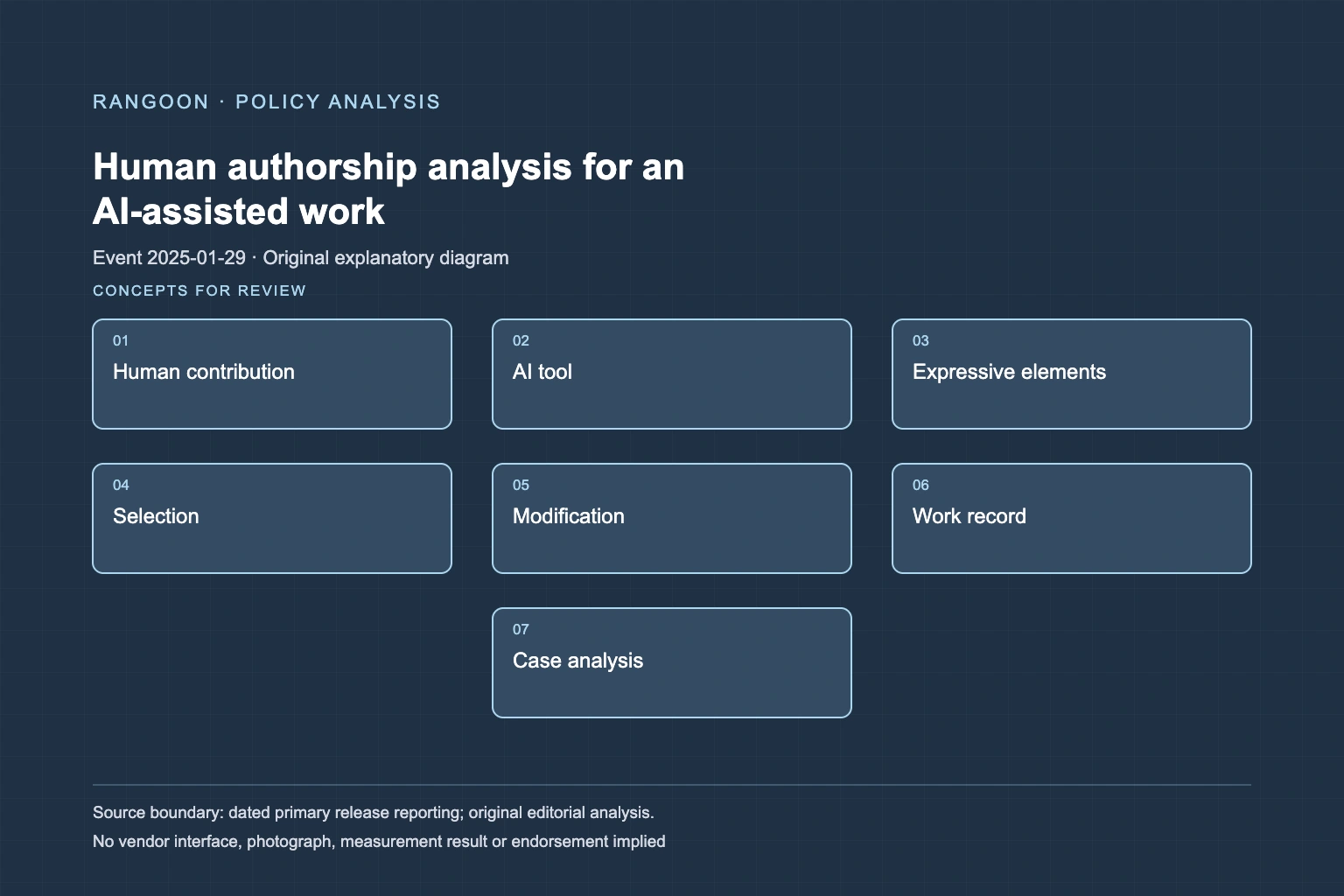
- Part 2 treated human control over expressive elements as the key question for copyrightability of AI-assisted output.
- The Office distinguished using AI as an assistive tool from material generated without sufficient human authorship.
- The report describes the Office’s legal and policy analysis, while individual works still turn on their facts and applicable law.
Part 2 focused the report on who authored the expressive material[source 1][source 2]
On January 29, 2025, the U.S. Copyright Office released Part 2 of its report on copyright and artificial intelligence. This part addressed whether outputs created with generative AI can be protected by copyright. The Office said existing copyright principles can be applied to the technology and framed the inquiry around human authorship of expressive elements. That made the event less a ruling on a single model than a public account of how the Office would analyze a class of works.
One tool can produce works with different authorship stories[source 1][source 2]
A creator can use the same system in two materially different ways. In one case, a human may supply preexisting expressive material and make creative changes to the result; in another, the system may determine the visible expression after only a general instruction. Part 2 makes that distinction more important than a product label such as “AI generated.” It also explains why a policy discussion cannot infer the copyright status of a work simply from a record that an AI service was involved. The report separates copyrightable human expression from noncopyrightable AI-generated material within the same output, pointing to partial rather than all-or-nothing analysis when only some portions reflect human choices. The relevant historical contribution is its authorship framework, not a new category of protection for all generated outputs.
The report supplied analysis, not a binding shortcut for registrations or disputes[source 1][source 2]
The Office concluded that it had not found a need for legislative change to resolve the copyrightability questions it addressed. That conclusion is the agency’s report position, not a replacement for statutes, courts, or the facts of a specific registration or dispute. Part 2 also said it would continue monitoring legal and technological developments and provide guidance through its registration practices. The January release therefore gives a dated policy record for human-authorship analysis, while leaving later administrative decisions and judicial outcomes outside the report itself. It directs attention to expression a person actually controlled in the work.
Sources
Continue reading